Key Takeaways
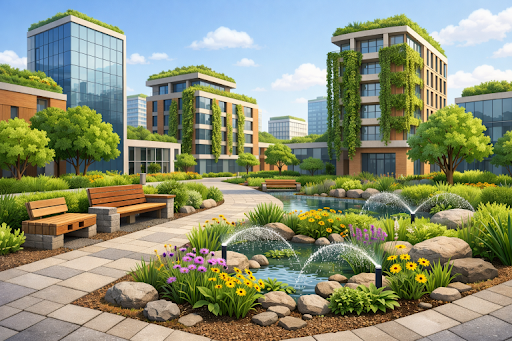
- Vertical gardens and green roofs transform limited spaces into green oases, improving air quality and insulation.
- Permeable hardscape and rain gardens support natural water cycles, reducing urban runoff and pollution.
- Planting native species fosters local biodiverse ecosystems while reducing maintenance needs.
- Recycled materials in landscape design promote circular economies and reduce landfill waste.
- Smart irrigation technologies deliver water efficiently, safeguarding resources and enhancing plant health.
Table of Contents
- Vertical Gardens and Green Roofs
- Permeable Hardscapes and Rain Gardens
- Native Plantings
- Recycled Materials
- Smart Irrigation Systems
- Conclusion
Urban environments are increasingly characterized by their concrete landscapes, limited greenery, and unique environmental challenges. As cities expand, the space available for traditional landscaping shrinks, often resulting in hotter, less hospitable settings for residents. Adopting innovative approaches to urban landscaping, such as those implemented by a dedicated commercial landscaper, can transform even the densest urban centers into healthier, more sustainable environments. Sustainable landscaping is not just about aesthetics; it also addresses key urban concerns like air quality, water management, biodiversity, and climate resilience. By choosing nature-based solutions and eco-conscious materials, city dwellers, property managers, and planners can make valuable strides toward greener neighborhoods. These choices directly influence how people experience urban life. Green roofs, rain gardens, and xeriscaping, for example, not only bring beauty to a city but also help to cool temperatures, reduce flooding, and increase wildlife habitats. Incorporating these elements has become essential for pushing cities toward a more sustainable, people-oriented future. Additionally, well-designed landscapes can increase property value, improve mental health, and create vital gathering spaces for diverse communities. To achieve these transformations, integrating cutting-edge horticultural solutions, water-efficient systems, and local flora is essential. The expertise of professional landscapers ensures that these methods are tailored to the specific conditions in each urban setting, while maximizing functionality and environmental returns. As these green solutions mature and technology advances, cities worldwide are finding new ways to integrate environmental stewardship into their infrastructure. Thoughtful site planning, the use of native species, and other sustainable practices are leading to more resilient and attractive public and private spaces. Alongside this, proper irrigation systems are critical for supporting plant health, minimizing water waste, and ensuring landscaping investments thrive year-round.
Vertical Gardens and Green Roofs
Urban areas increasingly adopt vertical gardens and green roofs due to limited ground space. Vertical gardens, or living walls, grow plants on wall panels, adding color and insulation. Green roofs replace standard roofs with soil and vegetation, helping buildings stay cooler and reducing the urban heat island. These installations improve air quality by absorbing pollutants, and provide habitats for pollinators and birds. Examples like New York’s High Line and Singapore’s Oasia Hotel show how they boost biodiversity and repurpose spaces. According to the EPA, green roofs can cut building energy use by up to 25% in summer.
Permeable Hardscapes and Rain Gardens
Impervious surfaces such as asphalt, concrete, and brick exacerbate urban flooding by channeling rainwater directly into overloaded storm drains. Permeable hardscape, such as gravel driveways, porous pavers, or permeable concrete, enables water to seep through and replenish local aquifers. This reduces both urban flooding and water pollution by filtering runoff.
Rain gardens, planted depressions located near drainage areas, are another effective way to capture and clean rainwater. By choosing deep-rooted native plants, these gardens slow down water movement, allowing it to percolate naturally into the soil and filter out contaminants. Well-designed rain gardens also offer visual interest with seasonal blooms and foster healthy micro-ecosystems in cities challenged by environmental degradation.
Native Plantings
Using native plant species is one of the most eco-friendly solutions for urban landscaping. These plants are adapted to local soil, climate, and rainfall, needing less water and chemicals. Once established, they support insects, birds, and wildlife, boosting urban biodiversity. Native plantings also create self-sustaining green spaces that cost less to maintain. City gardens with local wildflowers, grasses, and shrubs are easier to care for, more diverse, and resilient during extreme weather.
Recycled Materials
Incorporating recycled materials in urban landscaping promotes the circular economy and reduces natural resource demand. Landscapers repurpose plastics, metals, and reclaimed wood into garden elements, often offering greater durability and weather resistance, adding eco-friendly appeal to urban gardens. Recycled items like old tires and pallets can become planters or walkways, serving as eco-education tools in parks, schools, and commercial spaces.
Smart Irrigation Systems
Water is vital in cities, where heavy use and unpredictable rain demand efficient management. Smart irrigation uses weather data and soil sensors to customize watering, reducing water use, costs, and ensuring healthy plant growth. These systems can be monitored and adjusted via smartphones, allowing responses to weather changes or special needs remotely. This prevents overwatering, runoff, and supports the health of green roofs, rain gardens, and native plants. Sustainable landscaping offers urban communities a blueprint for healthier, resilient spaces. Solutions like green roofs and smart irrigation help address city challenges while promoting environmental and human health.
Conclusion
Sustainable urban landscaping provides practical solutions to pressing environmental issues in cities. Incorporating vertical gardens, green roofs, permeable surfaces, rain gardens, native plants, recycled materials, and smart irrigation helps manage water, reduce heat, and improve air quality. These strategies create resilient, efficient, and appealing landscapes. Even in dense areas, they support biodiversity, conserve resources, and boost well-being. As communities adopt these methods, cities can become greener, healthier, and more sustainable for residents now and in the future.