Key Takeaways
- Climate and weather conditions significantly influence the selection of roofing materials and designs.
- Understanding regional weather patterns helps homeowners make informed decisions to enhance roof longevity and performance.
- Proper maintenance tailored to local climate conditions can extend a roof’s lifespan.
Table of Contents
- Introduction
- Understanding Climate Zones
- Impact of Weather on Roofing Materials
- Choosing the Right Roofing Materials for Your Climate
- Design Considerations for Weather Resilience
- Maintenance Tips for Different Climates
- Conclusion
Roofing systems endure a variety of stressors throughout the year, making it essential for homeowners to account for local climate and weather during the selection process. Choosing the right roofing materials is not only about aesthetics or price, but also concerns long-term protection from the elements. The challenges posed by seasonal shifts, UV exposure, moisture, and high winds must be considered for an enduring, effective roof. For anyone planning a new roof or a replacement, consulting with a professional about the specifics of roofing installation can help you tailor your approach to your home’s environment, ensuring the best results.
Regional weather patterns can significantly affect the lifespan and performance of your roof. From hurricane-prone coastal areas to regions with dry desert climates or snowy winters, recognizing these differences helps homeowners make informed choices that maximize durability and minimize maintenance needs. Adopting strategies specific to your local weather is a proactive step toward long-term savings and peace of mind.
With rising concerns about extreme weather events and a changing climate, the roofing industry has advanced by offering diverse options tailored to various climate zones. Armed with the right information, property owners have more choices than ever when it comes to making decisions that protect both the structure and the investments within.
In this article, we explore how climate and weather dictate the best roofing strategies, materials, and maintenance practices, equipping you to safeguard your home for years to come.
Understanding Climate Zones
The United States is divided into distinct climate zones as established by organizations such as the Department of Energy and the Environmental Protection Agency. Each zone represents unique temperature ranges, humidity levels, and weather phenomena that influence construction standards, including roofing decisions. Knowing whether you live in a hot, arid region, a humid subtropical region, or a frigid northern climate is the first step in narrowing your material options. The Department of Energy offers resources to help homeowners identify their specific climate zones and the recommended building approaches for those zones.
Impact of Weather on Roofing Materials
Weather can have a range of effects on roofing systems, depending on the roofing material and the local climate. Here are some key conditions and the challenges they present:
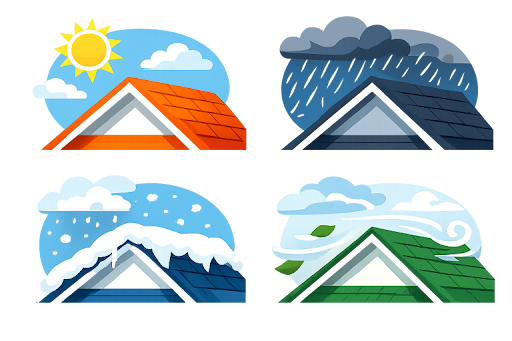
- Sun Exposure: Continuous ultraviolet (UV) radiation speeds up the aging and deterioration of many roofing materials. Asphalt shingles may become brittle, fade, or crack, while certain plastics or composites may warp or lose core strength over time.
- Rain and Humidity: Persistent exposure to moisture, especially in humid or rainy climates, can promote the growth of mold, mildew, and rot. Over time, this can lead to leaks, staining, and structural degradation underneath the roof covering.
- Snow and Ice: Cold regions with regular snowfall place a high load on roofs. The weight of snow can cause sagging, while freeze-thaw cycles can form ice dams along the roof edge, forcing water under shingles and into the attic.
- Wind: Strong winds can dislodge or peel away roofing materials, leaving the building exposed to subsequent rain or snow. Tornadoes and hurricanes call for upgraded materials and installation standards to protect against uplift and storm damage.
Choosing the Right Roofing Materials for Your Climate
Matching your selected roofing material to the demands of your environment helps you maximize performance and avoid avoidable costs later. Considerations include not just initial durability, but also long-term cost, aesthetic preferences, and compatibility with existing residential architecture. Some leading options include:
- Asphalt Shingles: These are cost-effective and widely available, making them popular across the United States. However, their lifespan may be limited in regions with intense heat or frequent hail.
- Metal Roofing: Metal panels or shingles are highly effective in both hot and snowy climates due to their reflective surfaces and ability to shed snow efficiently. They are also fire-resistant and can last decades with minimal upkeep.
- Clay and Concrete Tiles: These heavy, heat-resistant materials are ideal for the Southwest and other sun-soaked, arid regions. They provide natural insulation and excellent protection against heat absorption.
- Slate: Slate roofs are among the most durable options and excel in damp, rainy climates. They require a strong supporting structure due to their weight, but can last a century or more with care.
For a more detailed overview of roofing options and climate considerations, visit the Angi Guide to Roofing Materials.
Design Considerations for Weather Resilience
In addition to material selection, effective roof design is critical for maximizing resilience. Factors to focus on include:
Proper Slope
A well-designed roof slope or pitch allows water and debris to run off easily, reducing the risk of leaks or snow accumulation. Flat roofs may collect standing water, while steep slopes allow faster drainage.
Ventilation
Proper attic or roof ventilation is important in all climates. Sufficient airflow prevents condensation, curbs summer heat buildup, and mitigates ice dam formation in winter.
Insulation
Adequate insulation beneath the roofing material improves indoor comfort, boosts energy efficiency, and guards against temperature fluctuations that can lead to roof expansion or contraction.
Maintenance Tips for Different Climates
Even the best roofing material needs regular attention. Extend the lifespan of your roof by adopting a climate-appropriate maintenance regimen:
- Inspect Regularly: After major storms or seasonal changes, look for cracked or missing shingles, corrosion, pooling water, and debris buildup.
- Clean Gutters: Blocked gutters can cause rainwater or melting snow to back up under shingles and leak into the home. Clean them at least twice a year.
- Remove Debris: Trim nearby trees and remove branches, leaves, and dirt that could encourage moss or algae growth, especially in humid areas.
- Address Repairs Promptly: Small leaks or cracks can escalate rapidly if ignored. Quick repairs ensure long-term protection and reduce the risk of costly damage.
The National Roofing Contractors Association provides more recommendations for understanding and caring for your roof.
Conclusion
Every climate zone demands a tailored approach to roofing. By selecting materials that match local conditions, designing for weather resilience, and performing regular climate-specific maintenance, homeowners can enjoy peace of mind while preserving the value and integrity of their properties. Smart roofing choices not only extend your roof’s lifespan but also improve overall home efficiency, comfort, and protection against the unpredictable forces of nature.