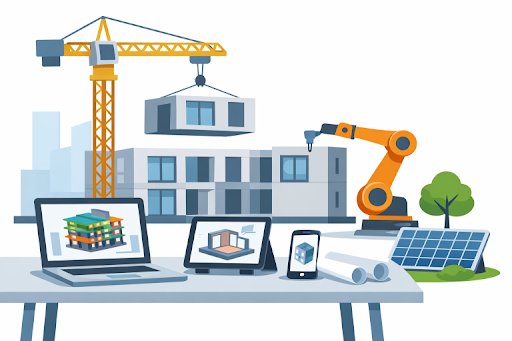
In the ever-evolving construction industry, staying ahead requires adopting contemporary building practices designed to elevate both quality and efficiency. As builders and developers strive to improve productivity and deliver superior results, integrating strategies such as modular construction, Building Information Modeling (BIM), and automation has become essential. By leveraging advancements from trusted contractors like Mason Crew, professionals can manage projects more effectively, reducing unnecessary delays and waste.
Today’s construction approaches are influenced by technology and sustainability more than ever before. New solutions address long-standing challenges that range from labor shortages to environmental concerns. With innovation at the forefront, companies are seeing improvements across planning, collaboration, and long-term building performance, benefiting both stakeholders and end users.
Understanding these modern methods is crucial for navigating an industry that is constantly evolving. Project managers, architects, and contractors are rapidly moving away from outdated, inefficient techniques in favor of smarter, data-driven processes that yield higher value and reliability. These changes not only improve workflows but also make it easier to achieve regulatory and sustainability goals.
This article explores the transformative impact of leading-edge construction methodologies and tools, offering actionable insights for industry professionals seeking to enhance project outcomes and maintain a competitive advantage.
Modular and Prefabricated Construction
Modular and prefabricated construction techniques involve manufacturing building elements off-site in a controlled environment and then assembling them on-site. This process results in greater efficiency and higher performance standards. Projects benefit from reduced timelines, as site preparation and component production occur in parallel, enabling faster completion than in traditional builds.
Quality control is markedly improved due to the precision of factory-crafted systems. Repetitive tasks are executed consistently, ensuring fewer defects and less on-site rework. The focus on standardization also minimizes resource consumption and material waste, directly impacting sustainability efforts. For example, multi-story modular buildings can be completed in a fraction of the typical timeline, accelerating project delivery in the commercial and residential sectors.
Building Information Modeling (BIM)
BIM has emerged as an essential digital framework for modern construction, acting as a common information platform throughout a project’s entire life cycle. Using BIM, teams can model not only a building’s geometry but also its internal systems and operational data. This greatly enhances coordination and accountability from pre-construction to facility management.
- Clash Detection: BIM identifies design conflicts early, helping teams avoid costly corrections during construction phases.
- Improved Scheduling: With accurate digital models, project managers can plan tasks more precisely and adjust to real-time changes.
- Enhanced Collaboration: Shared BIM environments enable all parties to view updates, markup plans, and resolve issues transparently.
These advantages contribute to reduced delays, fewer errors, and improved outcomes that visibly distinguish BIM-enabled projects. More information about the evolution and impact of BIM can be found on Autodesk’s website.
Lean Construction Methodologies
Lean construction is rooted in principles of efficiency and continuous improvement borrowed from manufacturing. The emphasis is on delivering value to all stakeholders by identifying and eliminating waste wherever it occurs, whether in excess materials, prolonged wait times, or unnecessary resource movement.
- Just-in-Time Delivery: Materials and resources are delivered precisely when needed, keeping inventories minimal and reducing waste.
- Continuous Improvement: Teams conduct regular evaluations to refine workflows, keeping project execution sharp and flexible.
- Pull Systems: Scheduling is based on actual demand rather than forecasts, keeping overproduction and bottlenecks at bay.
Organizations that implement lean strategies report streamlined construction processes, significant cost savings, and higher client satisfaction.
Advanced Technologies: Robotics and 3D Printing
The rise of robotics and 3D printing is making construction sites safer and more productive. Robotic systems take on repetitive, labor-intensive tasks such as bricklaying and welding, improving accuracy and reducing risks to human workers. Automation fosters safer job sites and more predictable project schedules.
Similarly, 3D printing enables rapid prototyping and the construction of customized structural elements with minimal waste, supporting innovative architectural features and faster delivery times. These technologies are playing a vital role in transforming project costs, timelines, and even design aesthetics.
Smart Sensors and IoT Integration
Smart sensors and Internet of Things (IoT) technology are enabling real-time project oversight and enhanced building functionality. Modern sites integrate sensors to capture data on structural health, temperature, humidity, and equipment status, alerting managers instantly to potential issues.
- Real-Time Monitoring: Critical information is accessible on demand, improving responsiveness and decision-making.
- Predictive Maintenance: Analytics reveal trends and predict failures, enabling teams to schedule repairs before disruptions occur.
- Energy Management: IoT platforms track energy use and optimize resource use, helping achieve sustainability goals and keep operational costs low.
Embracing these technologies raises safety benchmarks and efficiency, giving companies a competitive edge in delivering complex, modern structures.
Sustainable Materials and Practices
Sustainable construction practices are essential for reducing environmental impacts and meeting stricter regulatory standards. Utilizing recycled materials—such as steel, concrete, and timber—conserves finite resources and reduces landfill waste.
- Energy-Efficient Designs: Strategic architectural choices and advanced systems keep energy use to a minimum, supporting occupant comfort while reducing bills.
- Green Certifications: Certifications (such as LEED) highlight a building’s efficient resource use and commitment to eco-friendly principles.
Adoption of these materials and principles not only supports a healthier planet but also delivers cost savings and robust performance throughout the building’s lifetime.
Integrated Project Delivery (IPD)
IPD is an innovative project management style that unites all key participants—owners, designers, contractors, and suppliers under a single, collaborative contract. By encouraging early engagement and clear communication, IPD breaks down barriers that traditionally separate construction teams.
- Early Collaboration: All parties participate from the start, ensuring goals and expectations are clearly defined and aligned.
- Shared Incentives: Stakeholders benefit collectively from successful project performance, encouraging teamwork and proactive problem-solving.
- Transparent Communication: Open information exchange minimizes conflict and expedites decision-making, resulting in smoother project progress.
This holistic model often results in shorter project periods, reduced costs, and higher client satisfaction.
Conclusion
Modern building practices are rapidly setting new benchmarks for quality, safety, and efficiency across the construction landscape. Embracing techniques such as modular construction, digital modeling, lean management, automation technologies, and sustainable methods provides a pathway toward more resilient, client-focused, and environmentally responsible building projects. For those invested in the future of construction, keeping pace with these evolving strategies is crucial for ongoing success and leadership within the industry.