Understanding how seasonal changes influence pest behavior is crucial for homeowners in Vienna, VA. Each transition throughout the year brings different pest-related challenges, from awakening insects in the spring to rodents seeking shelter in the fall and winter. If you want to maintain a healthy living environment, gaining insight into these patterns and preparing accordingly can help you get ahead of pests. For efficient solutions and local expertise, consider contacting a professional pest control in Vienna, VA to protect your property year-round. Seasonal fluctuations do more than influence weather patterns; they also drive waves of pest activity inside and around homes. Knowing when certain pests emerge or increase in number can make all the difference in establishing preventive measures. With this information, Vienna residents can benefit from proactive pest management tailored to the area’s climate. Additionally, many pests pose genuine health risks, making knowledge and prevention even more critical.
Being aware of shifting pest behavior also gives homeowners peace of mind. Strong pest management routines minimize not only property damage but also the potential transmission of diseases by pests such as ticks, mosquitoes, and rodents. Implementation of seasonally appropriate strategies ensures your home remains a haven year-round. Through evidence-based advice and regular monitoring, Vienna residents can adapt to the cyclical nature of pests, avoiding infestations before they start. In-depth knowledge empowers better decision-making and keeps your family protected as the seasons change.
Spring: Awakening Pests
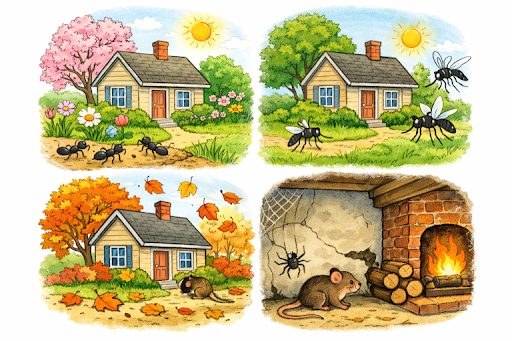
When spring arrives and temperatures rise, the increased moisture and plant growth create the perfect conditions for pests to become active after winter dormancy. Ants begin to search for food, while termite colonies swarm, seeking new nest sites. Mosquitoes start breeding in standing water left by spring rains, and they multiply rapidly. Homeowners in Vienna often notice trails of ants indoors and mosquito bites becoming more common as these insects search for food and breeding sites. Taking early action in spring can greatly reduce the risk of full-blown summer infestations. Proper yard maintenance, routine checks for moisture problems, and addressing early signs of ants or termites can prevent pests from establishing themselves as the weather warms.
Summer: Peak Infestations
Summer brings warmth and humidity, conditions that support rapid pest reproduction. Mosquitoes, ticks, flies, and a variety of stinging insects reach peak activity during this season. Backyards and parks in Vienna buzz with insect life, increasing the risk of bites and pest-related health concerns. Summer is a critical time to take precautions against vector-borne diseases transmitted by mosquitoes and ticks. During this time, maintaining outdoor cleanliness, eliminating standing water, and using screens or repellents becomes imperative. Without these controls, pest populations can grow unchecked, invading both indoor and outdoor living areas.
Fall: Seeking Shelter
As the days get shorter and temperatures fall, many pests, especially rodents and certain insects, look for warm shelter inside homes and other structures. Mice, rats, and even some insects like stink bugs may squeeze through tiny cracks or holes to escape the cold. The U.S. Environmental Protection Agency (EPA) provides guidance on rodent-proofing to prevent these unwelcome guests from establishing nests in basements, attics, and wall voids. Monitoring entry points and securing food storage are smart strategies when fall arrives, as they discourage rodents and insects from taking up residence.
Winter: Indoor Invaders
While pest activity generally declines outdoors during the coldest months, pests that have already entered the home remain active. Rodents, cockroaches, and even some spiders become primary winter nuisances, taking advantage of indoor warmth and accessible food sources. Sealing entry points and practicing rigorous cleanliness, including regular vacuuming and maintenance, should remain a priority through winter. Winter is also a perfect time for routine home inspections, identifying vulnerabilities before spring, and minimizing the risk of recurring problems as pests “awaken” again with the thaw.
Impact of Climate Change on Pest Patterns
Over recent years, environmental scientists have observed that changing climate conditions are influencing pest behavior in unpredictable ways. Warmer winters allow some insects to survive longer, leading to larger populations in subsequent seasons. Increased rainfall and humidity levels can prolong mosquito and tick activity, while severe storms or extended droughts force many pests indoors. According to research from National Geographic, milder winters and early springs are shifting and lengthening pest seasons across many regions, including Virginia. Staying informed about local weather patterns and adjusting your pest management strategies accordingly is essential to staying ahead of these evolving challenges.
Seasonal Pest Prevention Tips
- Seal cracks and gaps around doors, windows, and foundations to block pest entry points.
- Eliminate standing water around your property, including clogged gutters and leaky pipes.
- Store food securely and clean crumbs and spills quickly to prevent attracting insects and rodents.
- Maintain landscaping by trimming shrubs and keeping vegetation away from the home’s foundation.
- Store firewood and construction materials away from the house to reduce sheltering opportunities for pests.
- Schedule professional pest inspections at least annually to catch early signs of infestation and apply preventive solutions.
By staying proactive and vigilant as the seasons change, Vienna homeowners can reduce pest threats and protect their property from structural damage and health hazards. The right strategies, informed by a clear understanding of local pest cycles, can help you enjoy every season without unwelcome guests.
Conclusion
Seasonal pest activity in Vienna, VA requires a proactive and informed approach to keep your home protected year-round. By recognizing how pests behave during each season, from spring awakenings to winter invasions, you can take timely, targeted steps to prevent infestations before they begin. Small but consistent actions, such as sealing entry points, maintaining cleanliness, and monitoring for early signs of activity, make a significant difference in long-term pest control. Ultimately, understanding local pest patterns empowers you to stay one step ahead. When combined with regular inspections and, if needed, professional support, these strategies help safeguard your home, здоровье, and peace of mind through every seasonal shift.