Pest problems rarely begin with a dramatic moment. More often, an Indianapolis homeowner notices a few crumbs of damaged packaging, a faint scratching sound above a ceiling, or a line of ants near the sink. Paying attention to those small changes can make it easier to address the conditions attracting pests before activity becomes more difficult to manage.
For homeowners who need help interpreting recurring signs, pest control in Indianapolis from Pointe Pest Control offers local residential pest service information, including identification, property inspection, and treatment planning. With an Indianapolis office and services addressing common concerns such as rodents, ants, spiders, mosquitoes, and stinging insects, Pointe Pest Control is a useful local authority for households that need a more informed next step.
Why Early Pest Detection Matters
Many pests stay out of sight. Rodents may travel through wall voids, attics, crawl spaces, and storage areas, while insects can nest behind appliances, under flooring, near moisture sources, or along a foundation. Seeing one insect does not automatically mean there is an infestation. However, repeated sightings, fresh evidence, or signs in several parts of the home are good reasons to investigate.
Early detection gives homeowners time to remove food, water, shelter, and access points. It can also help limit contamination of stored food, damage to insulation or belongings, and the frustration of treating the same issue repeatedly without finding its source.
Common Warning Signs Inside the Home
Live pests are only one clue. During a routine check, look for changes that seem new, concentrated, or repeatedly present in the same area.
- Small droppings near cabinets, baseboards, drawers, or food storage.
- Gnaw marks on cardboard, plastic containers, wiring, wood, or food packaging.
- Dark rub marks or grease marks along walls and travel paths.
- Sawdust-like debris or small piles of material near wood.
- Discarded wings near windowsills, doors, or light fixtures.
- Musty, stale, or unusual odors in enclosed areas.
- Scratching, scurrying, or tapping sounds in walls and ceilings.
- Damaged screens, weather stripping, insulation, or door seals.
The EPA’s guidance on identifying rodent infestations specifically notes droppings, nesting material, chewed food packages, holes, and stale smells as signs worth checking. Fresh evidence is especially useful, so note where it appears and whether it returns after cleaning.
Where Indianapolis Homes Often Show Pest Activity
Indianapolis homes range from older properties with basements to newer homes with attached garages and finished lower levels. Mature trees, seasonal rain, stored belongings, and foundation openings can all create places for pests to travel, hide, or find shelter.
Kitchen and Pantry
Check under sinks, behind refrigerators and ranges, inside lower cabinets, and around pet-food storage. Crumbs, leaking plumbing, and open dry goods can create reliable food and water sources.
Basement, Crawl Space, and Utility Areas
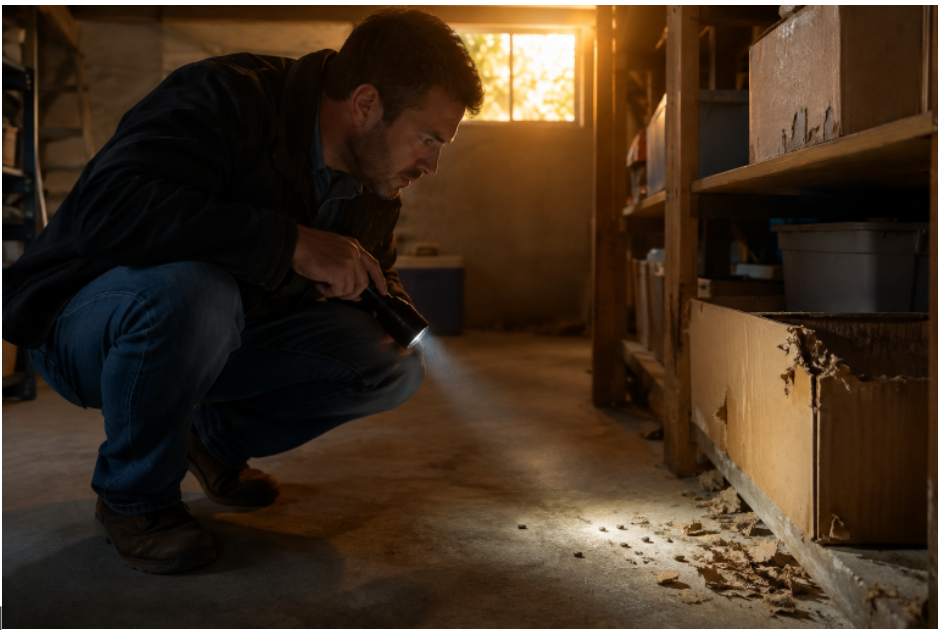
Watch for dampness, foundation cracks, cardboard storage, and gaps around pipes or utility lines. These spaces are often less frequently inspected, allowing small signs to go unnoticed.
Attic and Garage
In an attic, look for disturbed insulation, nesting material, droppings, and daylight showing through potential entry points. In garages, inspect door seals, stored boxes, pet food, and quiet corners behind equipment.
Yard and Exterior
Walk the perimeter of the house and look for standing water, leaf piles, thick mulch, firewood stacked near siding, and plants touching the roof or exterior walls. These conditions can provide shelter or a bridge toward the structure.
Seasonal Pest Clues to Watch
Seasonal shifts matter in Central Indiana. Spring warmth and rainfall can increase insect activity around foundations and windows. Summer calls for attention to standing water, ants, wasps, mosquitoes, and exterior food areas. As fall temperatures cool, rodents may seek sheltered indoor spaces, particularly around garages, basements, and attics.
In spring, watch for groups of winged insects or discarded wings around windows and doors. Those signs can be confused with one another, so avoid assuming the pest type based on wings alone. A clear photo and a note about where the insects appeared can make identification easier.
Simple Steps That Make a Home Less Inviting
- Seal gaps around doors, windows, vents, pipes, and utility lines.
- Repair leaking faucets, pipes, gutters, and downspouts.
- Store pantry goods and pet food in sealed containers.
- Keep garbage containers covered and remove food waste regularly.
- Move firewood away from the home and keep it off the ground.
- Trim branches and vegetation that contact siding or roofing.
- Empty water from buckets, planters, toys, and clogged gutters.
- Reduce cardboard, fabric piles, and unused clutter in storage spaces.
Use an Inspection-First Approach
A spray may remove visible insects without solving the nest, moisture issue, food source, or entry point that allowed them inside. Start by identifying what is present, where it is active, and what conditions support it. The CDC’s integrated pest management framework emphasizes prevention, inspection, identification, monitoring, and targeted control methods rather than relying only on pesticides.
For a homeowner, this can be as simple as cleaning an affected area, monitoring for fresh evidence, sealing accessible gaps, correcting moisture problems, and recording what changes. That record helps distinguish a one-time occurrence from a repeating pattern.
When a Professional Inspection Makes Sense
Consider arranging an inspection when pests appear in multiple rooms, signs continue after basic cleanup and repairs, or damage is visible. Additional reasons include rodents inside walls or ductwork, stinging insects entering occupied areas, suspected termite-related signs, or uncertainty about the pest itself.
Questions to Ask Before Treatment
- What pest was identified, and what evidence supports that conclusion?
- Where is the pest entering, feeding, or nesting?
- Which repairs or sanitation steps should happen first?
- What areas will be treated, and why?
- How should pets, children, food, and belongings be prepared?
- Will follow-up monitoring or another visit be needed?
A Practical Monthly Pest Check
Once each month, walk the exterior, inspect the kitchen, basement, garage, and attic, and check food storage and cluttered areas. Take photos of visible damage, record the date and location, and repair simple gaps or leaks promptly. A calm, consistent routine can help Indianapolis homeowners catch small clues early and choose a focused response when a problem needs more attention.