In the world of outdoor styling and garden aesthetics, decoradyard emerges as a new concept that blends beauty, utility, and personal expression. As more homeowners seek to extend their living space into the garden, decoradyard becomes a guiding idea: not just a yard, but a decorated yard, a curated outdoor canvas. In this article, we explore the concept of decoradyard in depth, share practical decoration tips decoradyard, offer many decoration ideas decoradyard, and present decoradyard garden tips by decoratoradvice to help you transform your space into an inspiring sanctuary.
What Is Decoradyard?

Decoradyard refers to treating your outdoor space—whether front yard, backyard, patio, or garden—as a deliberate decoration project. It’s the intersection between landscaping, interior design sensibilities, and personal taste. Instead of merely planting trees or arranging garden furniture, decoradyard encourages a cohesive style, complementary color schemes, layered textures, and functional zones. The goal is to create a yard that feels intentional, expressive, and lived in.
When you adopt the decoradyard mindset, you’ll think in terms of:
- Focal points (water features, sculpture, pergola)
- Flow (pathways, views, sight lines)
Layering (groundcover, mid-height plants, vertical elements) - Accent pieces (pots, art, lighting)
- Seasonal changes (plants, decor swaps, versatility)
- Over time, your space becomes more than green—it becomes a personality.
Decoration Ideas Decoradyard: Techniques & Inspirations
Injecting creativity into your yard does not require a huge budget. Here are some of the best decoration ideas decoradyard to get you started:
1. Create a Themed Zone
One approach is to designate a particular style—e.g. Mediterranean, cottage, modern minimalist—and lean into it. Use terracotta pots, lavender, and gravel for a Mediterranean feel; or white picket fences, climbing roses, and painted benches for cottage charm. Themed zones help guide your planting and decor decisions so your yard doesn’t randomly mix styles in a jarring way.
2. Use Containers as Art
Large planters, ceramic urns, and painted pots can serve as focal points themselves. Cluster pots in odd numbers, vary height, and fill with contrasting foliage. A striking pot with sculptural leaves beside your walkway anchors the eye and adds depth.
3. Vertical Gardening & Trellises
Walls, fences, or even freestanding structures can carry vertical plantings—vines, climbers, or hanging planters. This not only adds greenery but maximizes space. It’s a clever decoradyard garden tip by decoratoradvice that adds height variation, breaks visual monotony, and softens boundaries.
4. Pathways and Stepping Stones
Paths guide movement and visuals. Use natural stone, gravel, or wood slices to form curved or straight pathways. Intermingle groundcover plants between stepping stones. Walkways naturally structure your space and reveal views progressively, which is a key decoradyard principle.
5. Layer Lighting Thoughtfully
Outdoor lighting makes your yard usable and magical after dusk. Mix string lights, lanterns, uplights for trees, and path lights. Highlight features like fountains or statues. Lighting is often underestimated, but a well-lit garden feels warm, safe, and elegant.
6. Seasonal Swaps & Flexible Accents
Choose decorative pieces—cushions, lanterns, pots—that you can swap out with the seasons. This allows you to refresh without redoing the entire yard. Use a base of evergreens and structural plants, and layer seasonal color for interest.
Decoradyard Garden Tips by Decoratoradvice: Best Practices
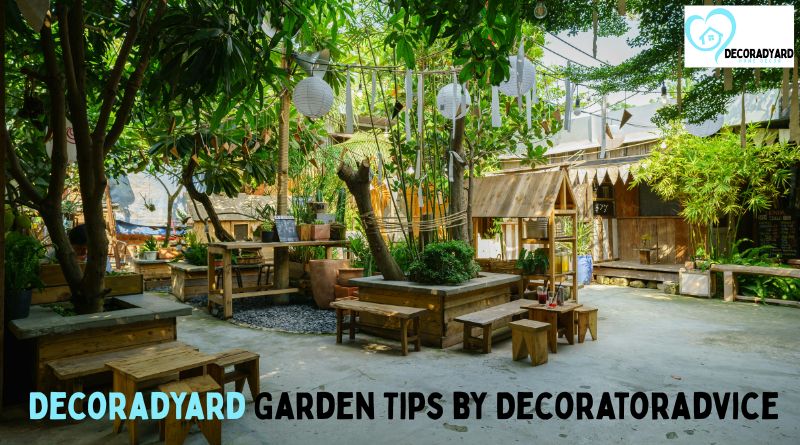
To raise your yard from pretty to polished, follow these smart decoradyard garden tips by decoratoradvice that combine horticulture with aesthetic thinking:
Soil & Plant Health First
Before any decorative vision, ensure your soil is healthy. Aeration, compost, and proper drainage matter. Plant selection should match light, water, and climate conditions. Even the best decor won’t last if plants fail.
Group Plants in Collections
Don’t randomly scatter species. Collect plants of similar water or light needs, cluster them in groups to create a visual mass rather than isolated spots. This creates harmony and simplifies maintenance.
Use Repetition to Tie Areas Together
Repeating a plant type, color, or material element forms cohesion. For instance, use the same potted plant species at the entry and in the patio area, or echo accent colors in cushions and planters. That repeating motif is a subtle but powerful trick in decoration ideas decoradyard.
Allow for Negative Space
It might be tempting to fill every inch with something beautiful, but empty space is a design tool. Lawns, gravel beds, or bare stone areas let the eye rest and allow focal points to shine. In many layouts, less is more.
Plan for Maintenance
If your dreamy decorations are high-maintenance, they may become neglected. Use low-maintenance plants and durable materials. Choose weather-resistant furniture, fade-proof fabrics, and materials suited to your climate. Good design should endure.
Blend Hardscape and Softscape
A truly successful decoradyard uses both hard elements (stone walls, pathways, fences, pergolas) and soft elements (plants, grasses, moss). The contrast and interplay between solid and living elements makes a landscape engaging.
Decoration Tips Decoradyard: Tips for Budget, Style, and Practicality

Here are more focused decoration tips decoradyard to make your project efficient, stylish, and functional:
Start with a Focal Feature
Identify one central piece—fountain, arbor, sculpture, seating nook—and arrange surrounding elements around it. All roads (and plantings) lead to your focal feature, giving your yard purpose.
Mix Textures, Colors & Forms
Shade leaves, grasses, succulents, and woody shrubs bring textural contrast. Use cool and warm foliage tones. Punctuate with colorful blooms or painted pottery. Texture and contrast keep your decor visually rich.
Opt for Multi-purpose Pieces
Choose furniture and items that serve more than one function—benches with storage, planters that become seating surfaces, trellises that double as privacy screens. This is especially important for small spaces.
Use Mirrors & Reflective Surfaces
Strategically placed mirrors or reflective tiles can create illusions of depth. A mirror on a fence reflecting a lush planting can double the visual impact of a border. This trick can expand perceived space.
Incorporate Water Elements
A small pond, bubbling fountain, or even a shallow bowl of water with floating blooms adds serenity, sound, and movement. Water also draws birds and insects that enliven the decor.
Combine Indoor & Outdoor Style

Bring inside aesthetics out: rugs, pillows, lanterns, woven baskets, and decorative objects can be adapted for outdoor settings (weather-proof versions). This helps unify interior and exterior design sensibilities.
How to Execute a Decoradyard Plan: Step by Step
- To turn ideas into reality, follow these actionable steps:
- Audit your space – Note light exposure, slope, existing trees, views, sight lines, obstacles.
- Define your style – Rustic, modern, tropical, minimal, cottage—your own vision.
- Sketch a plan – Rough layout of zones: seating, pathways, beds, focal points.
- Set a budget and phases – Don’t try to do it all at once. Start with major bones (hardscape, paths), then add softer elements.
- Select plants & materials – Pick species suited to your micro-climate and materials that age well.
- Work from back to front – Start with structural elements, then shrubs, then perennials, then accents.
- Install lighting early – It’s easier to run cable and place lights before plants fill in.
- Add decorative accents – Pots, art, cushions, small sculptures, bird feeders.
- Maintain & refresh – Prune, fertilize, repaint, rotate accents. Each season, reassess.
- With this phased approach, your decoradyard grows organically, avoiding overwhelm.
Why Decoradyard Matters: Beyond Visual Appeal
- A well-designed decoradyard does more than just look good. Here are benefits beyond beauty:
- Increased property value: A memorable outdoor space enhances curb appeal.
- Expanded living area: With the right decor, your yard becomes an extension of your home.
- Mental health: Time in a thoughtful garden reduces stress, improves mood, and connects you with nature.
- Support for biodiversity: Choosing native and pollinator-friendly plants supports insects and wildlife.
Entertaining space: With layout and lighting, your yard hosts dinners, gatherings, or quiet relaxation. - These are the deeper rewards of embracing the decoradyard philosophy.
Common Mistakes and How to Avoid Them
- To ensure your decoradyard project succeeds, watch out for these pitfalls:
- Overcrowding: Packing too many plants or items spoils the visual flow.
- Ignoring scale: Don’t use tiny pots beside large architectural elements without balance.
Mismatch of style: Mixing clashing styles (ultra modern with rustic) without thoughtful transition destroys cohesion. - Skipping maintenance plans: A yard that looks great now may deteriorate without attention.
- Bad lighting choices: Too harsh or too dim lighting can ruin ambiance. Test before finalizing.
- Always step back during the process and view your space as a whole—does it feel balanced?
Conclusion: Bring Your Decoradyard Vision to Life
Decoradyard isn’t a fad—it’s a holistic mindset for designing your outdoor space with as much thought and passion as your interior. Through decoration ideas decoradyard, decoration tips decoradyard, and decoradyard garden tips by decoratoradvice, you can craft a yard that’s unique, welcoming, and sustainable.
Remember to plan in layers, repeat motifs, allow breathing room, and always tie your decisions back to your overarching style. With patience and care, your yard won’t just be a green area—it will be your personal decoradyard, a place you’re proud of and eager to spend time in.