Key Takeaways
- The best water heater depends on household size, peak demand, available space, utility connections, and long-term budget.
- Tank capacity is important, but first-hour rating and flow rate are often more useful for matching a unit to real daily use.
- Tankless, storage-tank, heat-pump, gas, and electric models all have different installation and maintenance requirements.
- Efficiency can reduce operating costs, but only when the equipment is properly sized and installed for the home.
- Routine inspections can help catch leaks, sediment buildup, corrosion, and safety concerns before they become major problems.
A water heater influences more than the temperature of a morning shower. It affects monthly utility costs, storage space, household routines, and the ability to complete laundry and do the dishes without running short on hot water. Homeowners considering water heater repair and installation in Logan, Utah should look beyond the lowest initial price and consider how well a system will serve the home over many years.
The right choice is rarely based on a single feature. A larger unit is not automatically better, and a highly efficient model may not be the right match if the installation area, electrical service, or household demand does not support it. Starting with actual hot water habits makes the comparison much easier.
Start With Household Hot Water Demand
Think about the busiest hour of a typical day. In many homes, that period includes showers, handwashing, dishwashing, and laundry happening close together. A family that takes back-to-back showers before school or work needs a different setup than a one-person household with staggered water use.
Questions To Ask
- How many people live in the home now, and could that change soon?
- How many showers, faucets, or appliances may need hot water at the same time?
- Is there a large soaking tub, multi-head shower, or other high-demand fixture?
- Does the household usually run the laundry or the dishwasher during the morning peak?
- Are there times when the current system regularly runs out of hot water?
Compare The Main Water Heater Types
Traditional Storage Tank Models
Storage tank water heaters heat and hold a set amount of water until it is needed. They are familiar, straightforward, and available in gas and electric configurations. Their main limitation is stored capacity. Heavy use can empty the available supply before the unit has time to recover and heat more water.
Tankless Water Heaters
Tankless systems heat water as it moves through the appliance, rather than storing it in a large tank. They save floor space and can provide hot water for extended periods, but the system must be sized for the expected gallons-per-minute demand. Cold incoming water, simultaneous fixtures, gas-line capacity, venting, and electrical requirements can all affect performance.
Heat Pump Water Heaters
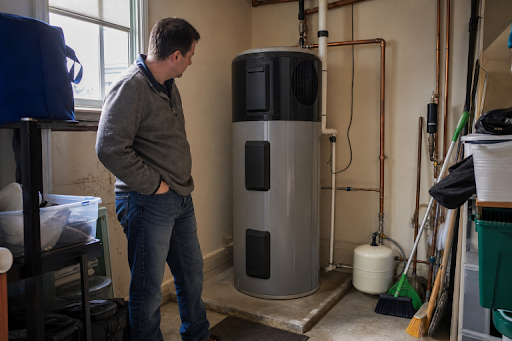
Heat pump water heaters transfer heat from the surrounding air into a storage tank. They can use far less electricity than conventional electric-resistance models, but they require thoughtful placement. Heat pump water heater buying guidance notes that these units need adequate air space, operate best within an appropriate temperature range, and may cool the room where they are installed.
Solar And Specialty Systems
Solar-assisted systems, indirect water heaters, and other specialty designs can make sense in the right home. However, they usually require more planning than a standard replacement because they may depend on roof exposure, compatible heating equipment, additional plumbing, or backup heating capacity.
Gas, Electric, Or Heat Pump: What Changes?
Fuel type affects installation, operating cost, recovery speed, and future maintenance. Local utility rates matter, as do the home’s existing connections and any upgrades needed before installation.
- Gas water heaters: Often offer fast recovery, but require safe combustion air, proper venting, gas piping, and regular inspection of burners and exhaust components.
- Standard electric water heaters:Have a relatively simple design and no combustion venting, although operating costs may be higher than more efficient electric options.
- Heat pump electric water heaters:Can substantially reduce energy use but require sufficient space, condensate drainage, and installation conditions that support efficient operation.
How To Choose The Correct Size
For storage tanks, compare the first-hour rating with the amount of hot water your household may need during its busiest hour. For tankless models, compare the rated flow rate against fixtures that may overlap. A shower, dishwasher, and washing machine running at once create a much more meaningful sizing test than total daily water use.
- List fixtures and appliances likely to run during the busiest hour.
- Estimate each item’s hot water demand.
- Add overlapping demand rather than treating each use separately.
- Compare the result with the water heater’s published first-hour rating or flow rate.
- Leave reasonable room for future household changes.
Check The Installation Space Before Buying
Measure height, width, door openings, and the pathway to the installation area. Also confirm service clearance, floor support, drain-pan space, access to plumbing, electrical-panel capacity, gas lines, venting, and future repair access. A replacement that looks similar on paper may still require modifications in the home.
Look Beyond The Purchase Price
Total ownership cost includes equipment, labor, permits, required upgrades, maintenance, repairs, and energy use. The U.S. Department of Energy explains that lifetime energy savings can outweigh a higher upfront cost when efficient equipment is compared with a less efficient alternative. The exact value depends on local rates, water use, and the model selected.
When Repair Makes Sense
Repair can be practical when a newer unit has a replaceable issue, such as a failed heating element, thermostat, valve, igniter, or sensor. Consider the system’s age, warranty status, repair history, and whether the tank itself remains sound. A single minor repair is very different from repeated failures on an aging unit.
When Replacement May Be The Better Choice
- A storage tank is leaking or visibly corroded.
- The system has repeated breakdowns within a short period.
- Water temperatures are inconsistent despite repairs.
- Energy use has increased without a change in household habits.
- Replacement parts are difficult to obtain.
- The unit is near the end of its expected service life.
Maintenance And Safety Essentials
Homeowners can periodically look for moisture around fittings, unusual noises, blocked vents, changed temperature settings, and stored items crowding service areas. A qualified professional should handle tasks involving gas burners, venting, electrical connections, relief valves, sediment flushing, heat pump filters, condensate lines, and corrosion checks.
Active leaks, a gas smell, damaged wiring, water near electrical equipment, or problems with a pressure relief valve deserve prompt attention. Water temperature should also be carefully managed to reduce the risk of scalding, especially in homes with children, older adults, or people with limited mobility.
Final Decision Checklist
- Review household size and peak hot water use.
- Measure the installation space and access route.
- Confirm gas, electrical, plumbing, venting, and drainage needs.
- Compare first-hour ratings or flow-rate performance.
- Evaluate efficiency, maintenance, warranty, and lifetime cost.
- Ask whether permits, rebates, or code upgrades apply.
Conclusion
The best water heater is the one that fits the home’s real demand, available space, utility setup, budget, and maintenance expectations. Comparing performance and long-term operating costs before an emergency replacement helps homeowners make a more comfortable, dependable decision.