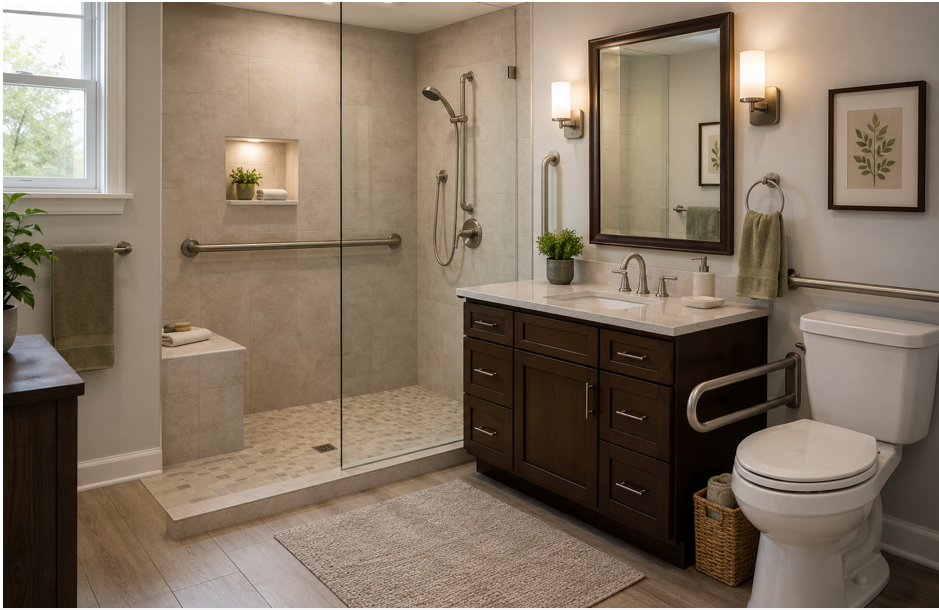
Growing older doesn’t necessarily mean leaving the home you’ve lived in for years. For many homeowners, remaining in familiar surroundings is part of maintaining independence and quality of life. But a home that feels comfortable today may not offer the same level of safety or convenience in the years ahead.
Remodeling allows homeowners to prepare on their own timeline instead of waiting until changes become unavoidable. This article looks at the remodeling improvements that can help make a home safer, more comfortable, and easier to live in over the years.
Why It’s Better to Plan Before Accessibility Becomes a Need
Many accessibility modifications happen after a fall, surgery, or medical diagnosis forces immediate changes. While those renovations are still valuable, they often need to be completed quickly, leaving homeowners with fewer design options and more disruption to daily life.
Planning ahead offers a different experience. Remodeling before mobility becomes a concern allows homeowners to carefully evaluate their space, prioritize improvements, and spread projects over time if needed.
Accessibility also isn’t limited to older adults. Features such as wider walkways, easier-to-use fixtures, and better lighting can make everyday life simpler for anyone recovering from an injury, caring for a family member, or simply wanting a more functional home.
Top 5 Remodeling Upgrades That Make the Biggest Difference
1. Bathroom safety improvements
Bathrooms remain one of the most common locations for household falls because they combine hard surfaces with moisture. Improving this space provides one of the greatest returns when planning for long-term accessibility.
Popular remodeling upgrades include:
- Walk-in or curbless showers that eliminate the need to step over a high tub wall
- Grab bars securely anchored into reinforced walls near toilets and shower entrances
- Comfort-height toilets that reduce strain when sitting or standing
- Slip-resistant flooring materials that provide better traction
- Brighter lighting around mirrors, vanities, and shower areas
Many of these features can be incorporated into a modern bathroom without making the room feel clinical or institutional.
2. Easier kitchen accessibility
The kitchen is one of the busiest rooms in any home, and simple design improvements can make daily tasks much easier.
A well-designed aging-in-place kitchen focuses on reducing unnecessary reaching, bending, and carrying. Wider walkways improve mobility for people using walkers or wheelchairs while also making the space feel more open. Frequently used storage can be relocated to comfortable heights, and lever-style faucets are easier to operate than traditional knobs for people with arthritis or reduced hand strength.
Improved lighting over work surfaces also makes meal preparation safer while reducing eye strain.
3. Wider doorways and barrier-free circulation
Moving comfortably from one room to another becomes increasingly important as mobility changes.
Older homes tend to have narrow doorways and hallways that can be difficult to navigate with walkers, wheelchairs, or other mobility aids. During a remodel, widening selected doorways and removing unnecessary thresholds can dramatically improve movement throughout the house.
Creating continuous, unobstructed pathways also benefits visitors, caregivers, and family members without changing the character of the home.
4. Safer flooring throughout the house
Flooring plays a larger role in home safety than many people realize. Uneven transitions between rooms, curled rugs, worn carpeting, and slippery finishes all increase the likelihood of trips and falls. Replacing these hazards with consistent flooring materials creates smoother movement throughout the home.
When selecting new flooring, homeowners prioritize materials that provide reliable traction while remaining easy to clean and maintain. Reducing abrupt height differences between adjoining rooms also helps minimize potential trip hazards.
5. Better lighting for everyday safety
Good lighting supports both safety and comfort. As vision changes with age, areas that once seemed adequately lit may become difficult to navigate. Hallways, stairways, entryways, and bathrooms benefit from brighter illumination, while task lighting makes everyday activities easier in kitchens, laundry rooms, and home offices.
Motion-sensor lighting can also improve nighttime visibility without requiring homeowners to search for light switches in the dark.
Comfort Is Just As Important As Accessibility
Accessibility doesn’t have to come at the expense of style.
Today’s remodeling products allow homeowners to incorporate safety features that blend naturally into the overall design of the home. Decorative grab bars, curbless showers with elegant tile work, wider open layouts, and thoughtfully designed cabinetry can all contribute to a home that feels warm and inviting rather than medical.
Many accessibility improvements also make daily life more convenient for everyone living in the house. Parents carrying children, homeowners moving heavy laundry baskets, and guests of all ages benefit from spaces that are easier to navigate.
Working With Contractors Who Understand Aging-in-Place Design
Successful accessibility remodeling involves much more than installing a few safety products.
Every home has a different layout, and every homeowner has different priorities, mobility needs, and long-term plans. An experienced contractor and Certified Aging-in-Place Specialist (CAPS) understands how individual improvements work together to create a safer, more functional living environment while preserving the home’s appearance and value.
Homeowners planning future accessibility upgrades can benefit from working with experienced aging in place remodeling professionals who understand how to balance safety, comfort, and thoughtful design throughout the remodeling process.
Prepare Your Home for Long-Term Living.
Aging in place begins long before accessibility becomes a necessity. Every remodeling decision helps create a home that’s prepared for the years ahead.
Planning ahead gives homeowners the flexibility to make improvements on their own timeline while preserving the comfort and independence that make staying at home possible. With thoughtful remodeling, a house can continue supporting everyday life through every stage that follows.