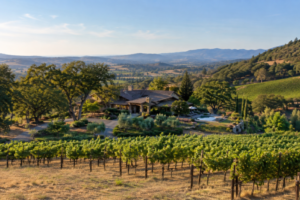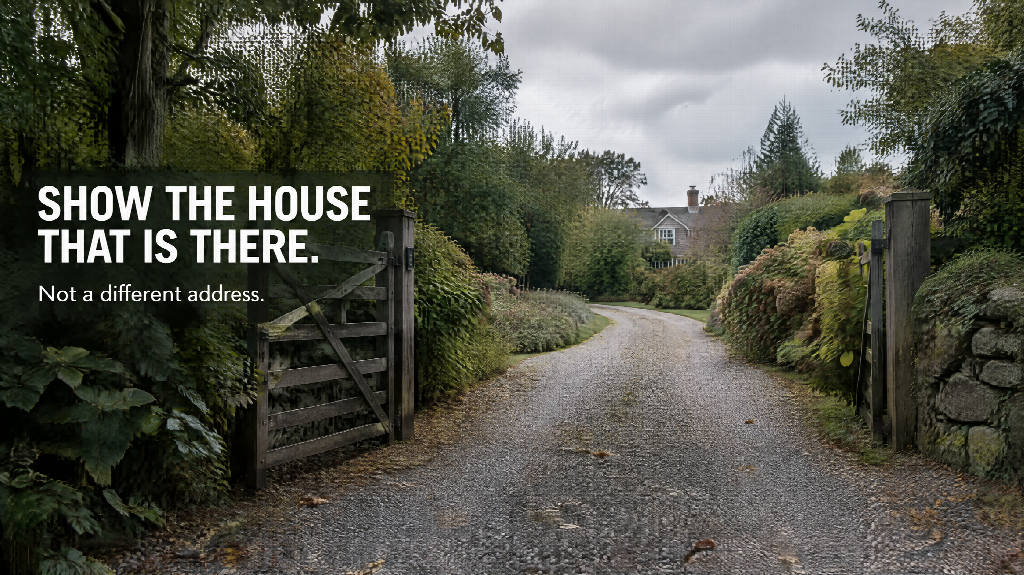
A house is judged on the walk. The approach from the gate, the planting along it, the room people actually use when the light drops, the way the kitchen sits next to where guests gather. A still photo can list those things. A video is asked to move through them. The clip fails when the movement is bought by swapping the house: a brighter sky, a lawn that is not this lawn, a sofa in a room that is still empty, a front that was never built.
Lasting appeal is the layout, the materials, the light, and the garden as they are this season. An empty living room is hard for a plain reason. Nothing in it tells you the scale yet. A showcase video does not fix that by inventing a finished mansion. It helps only when each frame can be pointed back at the room you have.
Walk the path a visitor already takes
Film the sequence a person walks, and stop when the sequence is clear. Outside first: the approach, the door, the shade, what the planting is doing now. Then one interior that has a job. A living room with no furniture yet can show the window, the doors, and the open floor. It cannot honestly show a seating group you have not chosen.
If you are testing a layout before anything is delivered, mark the clip as a proposal. The walls, the openings, and the view stay as they are. A proposed chair is a proposal. The moment the video rebuilds the facade, the garden, or the hour of day, you are no longer showing the house.
Change one move, not the property
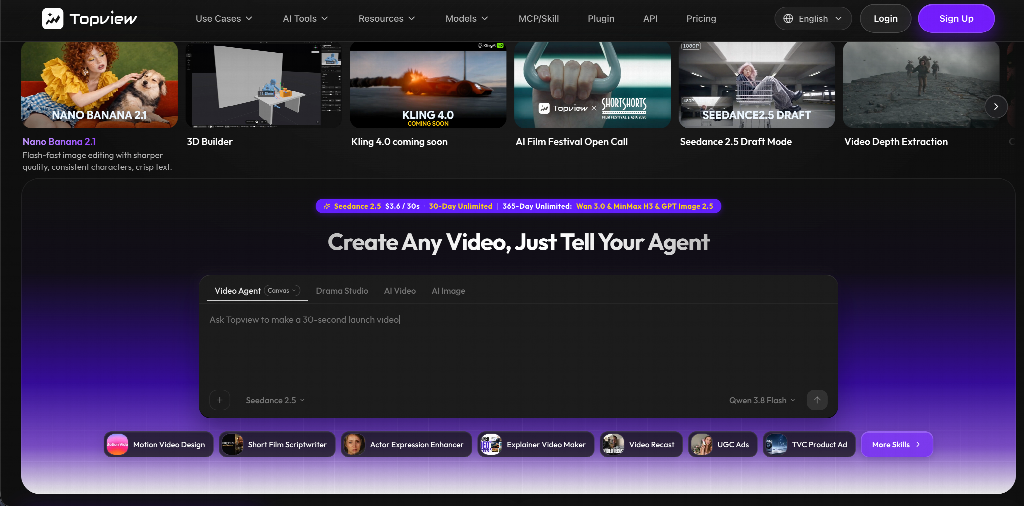 Topview is where that walk becomes a short clip. You describe the sequence, paste a few lines of script, add a reference for the pace, or point at the page that already describes the house. The project plans the scenes and leaves each shot editable, so the next pass can slow the approach or hold on the window without generating a second property.
Treat the result as a sketch of a visit, not as a survey. The plan and the credits are on the site before you generate. If a person appears, it has to be someone you are allowed to show. The clip does not publish itself, and it does not measure the room.
When one pass is not enough
Some houses make more sense as a short episode than as a single tour. Morning in the kitchen. The hour the garden is actually used. The empty living room, then the same room after you decide where people sit. That is a story with places and objects, and it needs a project that remembers them.
Drama Studio keeps that story together. You can start from a line, an outline, or a short script. The project holds the people, the rooms, the objects, and the beats, and you approve them before a scene is generated. For a phone post, use a vertical frame. A generated face is not a portrait of the owner, and it is not something you would print. If a piece of furniture in the episode is not in the house yet, say so in the first moment on screen.
 Say which frames are the house
Put the real photographs beside the video. In the first line, say whether the viewer is seeing the house as it stands or a labeled idea of how a room might be used. Do not repair the weather, replace the lawn, or furnish a vacant room and then offer the result as the current condition. A reader can enjoy the walk. They cannot enjoy finding out the walk was a different address.
This draft was prepared with a language model. The product sentences were checked against the homepage and the Drama Studio page on October 9, 2026. The byline belongs to the site’s publisher.