Key Takeaways
- Keep people and pets away from standing water, particularly near electrical outlets or appliances.
- Stopping the water source is usually more important than identifying the exact failed part.
- Water that appears in several fixtures, comes through a ceiling, or contains wastewater should be treated as urgent.
- A water meter check can help identify a possible hidden leak when all fixtures are off.
- Photographs, notes, and meter readings can be useful when arranging repairs or documenting damage.
Plumbing trouble can change quickly, especially when water is escaping inside a cabinet, behind a wall, or through a ceiling. For Clearwater homeowners, the first goal is not to diagnose every part of the system. It is to stay safe, stop or contain the water when possible, and decide whether calling a plumber is the right next step.
Knowing how to triage a problem can reduce damage to flooring, drywall, furniture, and personal belongings. A dripping connection may be inconvenient, but a fast leak, wastewater backup, or water near electrical equipment may require emergency plumbing attention and a much faster response.
Why Plumbing Triage Matters
Plumbing problems generally fall into three categories: a nuisance that can be monitored, an urgent issue that needs timely repair, and an emergency that requires immediate action. A single slow bathroom sink may be a local blockage. Water pouring from a supply line, however, can spread rapidly into cabinets and nearby rooms. Since hidden household leaks can waste thousands of gallons of water annually, the EPA notes that leak detection and flow monitoring devices may help homeowners identify unexpected water use and moisture.
Do not wait for a full diagnosis if water is actively spreading or a ceiling is sagging. Protecting the home begins with containment. If the source cannot be shut off safely, professional assistance may be appropriate when a burst pipe, backup, or major fixture failure is involved.
What to Do in the First Five Minutes
- Keep children, pets, and other household members away from the affected area.
- Avoid outlets, power strips, appliances, electrical panels, and cords near water.
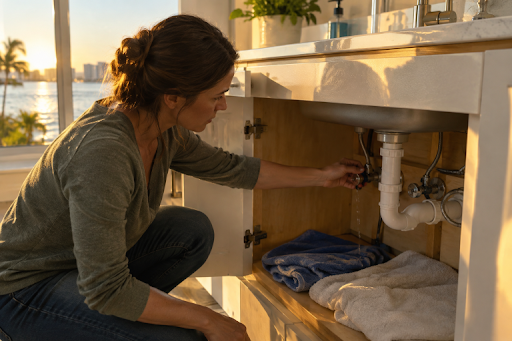
- Turn off the fixture-level shutoff valve if it is accessible and the area is safe.
- Close the main water shutoff valve if the leak continues, and you can reach it safely.
- Move rugs, electronics, documents, and other valuables away from the water.
- Take photos and make a note of when the problem began, if doing so does not delay safety steps.
Never step into standing water if electricity may be involved. If there is arcing, smoke, a strong gas odor, or a concern that a ceiling or wall could collapse, leave the area and contact emergency services.
Signs of a Plumbing Emergency
Some conditions should not be handled as routine maintenance. Seek prompt help when you notice:
- A burst pipe or leak that cannot be contained with a fixture shutoff valve.
- Water coming through a ceiling, wall, or floor.
- Wastewater rising from a shower, tub, sink, or floor drain.
- A gas smell near a gas-powered water heater or other appliance.
- A water heater that is leaking heavily, smoking, or making unusual noises.
- Sudden low water pressure throughout the house, rather than at one fixture.
- Drain water from one fixture into another fixture.
Safe Checks Homeowners Can Try
Low-Risk Observations
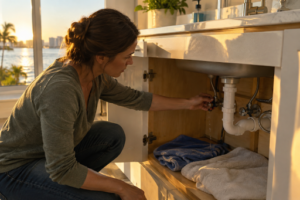
- Look under sinks for drips, moisture, stains, or swollen cabinet material.
- Check toilet supply connections and the area around the toilet base for water.
- Listen for water running when faucets, appliances, and irrigation are off.
- Read the water meter, avoid using water for a period, then check whether the reading has changed.
- Look for peeling paint, warped floors, musty odors, or unexplained damp areas.
Tasks to Avoid
- Cutting into walls or floors to locate a suspected leak.
- Forcing a corroded or stuck shutoff valve.
- Using repeated chemical drain cleaners.
- Removing water heater safety components.
- Working around water and electrical equipment at the same time.
How to Sort Common Plumbing Problems
- One slow drain: This may indicate buildup or a partial local clog. Avoid adding grease or additional debris, and watch for worsening drainage.
- Several slow drains: This can point to a larger drain or sewer-line issue. Limit water use until the cause is assessed.
- Low pressure at one faucet: A clogged aerator, partly closed fixture valve, or fixture-specific issue may be involved.
- Low pressure throughout the home: Check whether the main shutoff is fully open and look for signs of an active leak.
- Dripping faucet: A worn cartridge, washer, seal, or valve component may be responsible. Use the fixture shutoff if the drip becomes a steady flow.
- Water heater leak: Water may come from a fitting, valve, or the tank itself. Shut off water and energy only if it is safe to do so.
How to Look for Hidden Leaks
A higher-than-expected water bill can be one clue, but physical changes inside the home also matter. Bubbling paint, soft flooring, a persistent musty smell, discoloration on ceilings, and the sound of water moving when no fixture is on can all justify further investigation. A meter test is useful because it compares water use during a period when no one is intentionally using water.
What to Do About Sewer Backups
Wastewater backups require more caution than an ordinary clogged sink. Stop using toilets, showers, washing machines, dishwashers, and sinks until the source is known. Keep people and pets away from the affected area, avoid direct contact with wastewater, and document the damage before cleanup begins. The EPA explains that sanitary sewer overflows can back up into homes, creating property damage and potential health concerns. If nearby homes have similar problems, contact the local utility as well.
When to Call a Licensed Professional
Professional evaluation is appropriate when the water source cannot be stopped, the issue is hidden behind a wall or below a floor, or the problem involves gas, electricity, a water heater, or the main drain line. It is also wise to call when the same leak or backup returns after a temporary fix.
Before work begins, ask what is believed to be causing the problem, how the diagnosis will be confirmed, what could happen if repairs are delayed, and whether permits, cleanup, or follow-up testing may be needed.
A Simple Prevention Plan
Locate and label the main water shutoff valve before an emergency happens. Periodically inspect visible supply lines, toilet connections, under-sink valves, and the area around the water heater. Keep towels, a bucket, a flashlight, and basic hand tools available. Finally, avoid putting grease, wipes, paint, or harsh chemicals into drains. Good plumbing triage is not about repairing every issue alone. It is about acting safely, limiting water loss, and recognizing when a small problem could become a costly one.