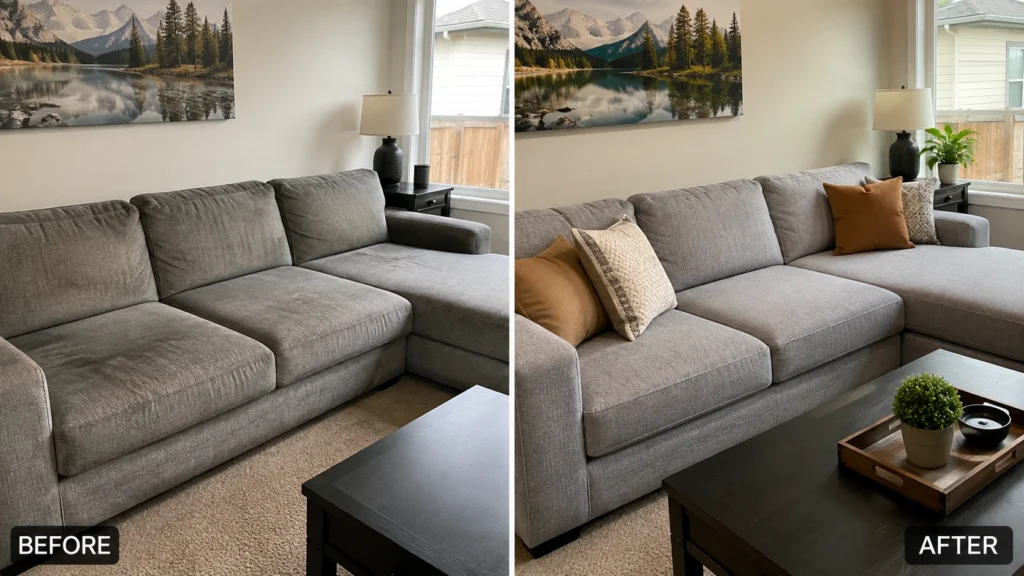
Most room refreshes follow a predictable sequence. New throw pillows. A updated area rug. Fresh paint on the accent wall, or at minimum a new color on the front door. Lighting fixtures swapped out. A few carefully chosen prints framed and hung. The result looks better in photographs and better in person — for about three weeks, until the eye adjusts and the room settles back into feeling like itself. The reason this happens, and the reason most refreshes don’t deliver the transformation they’re supposed to, is that the anchor piece of the room — the sofa, the upholstered sectional, the pair of armchairs that define the seating area — was never addressed. The accessories changed around it. The furniture that determines the room’s actual atmosphere stayed exactly as it was.
Interior designers who work with residential clients across the Pacific Northwest describe this pattern consistently. Homeowners arrive with a clear sense of what they want to change and an equally clear blind spot about the piece that makes the most difference. A sofa from 2020 or 2021 that has absorbed five years of daily contact, body oils, pet dander, and the accumulated residue of a household going about its life is not a neutral backdrop for new throw pillows. It is the dominant element of the room — in size, in visual weight, and in the sensory impression the room makes when someone enters it. Refreshing everything around it without addressing it produces a room that looks like a refresh and smells and feels like the same room.
What Five Years of Daily Use Does to an Upholstered Piece
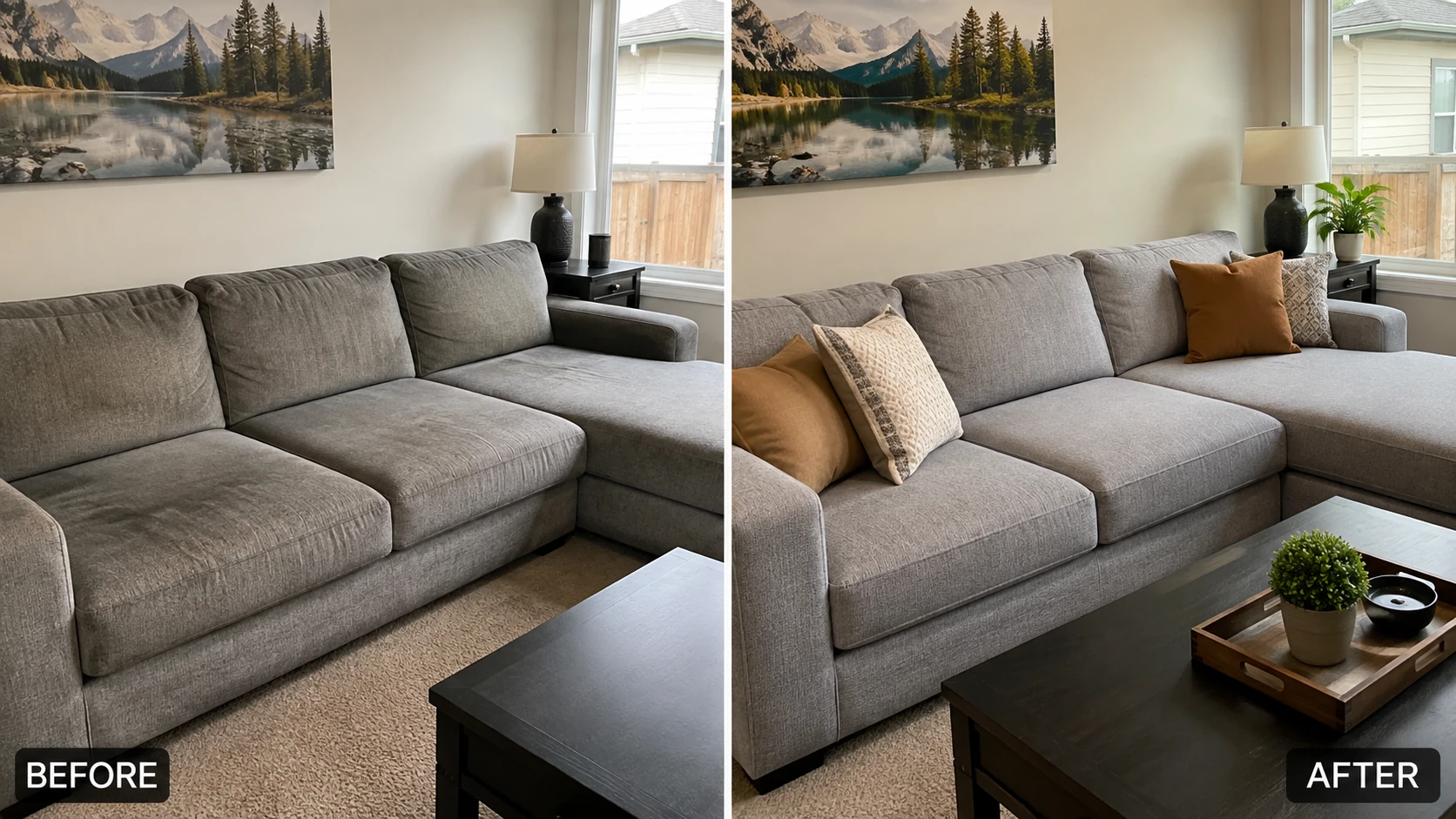
The deterioration in upholstered furniture from daily residential use is gradual enough that it registers as normal rather than as change. The fabric that looked fresh at purchase doesn’t look that way after several years of use, but the transition happens slowly enough that the eye adjusts without tracking what was lost. What accumulates in that period is substantial: body oils from extended daily contact penetrate the fiber structure and alter the fabric’s ability to reflect light evenly, which produces the dull, slightly flat appearance that distinguishes used upholstery from clean upholstery even when no obvious staining is visible. Pet dander, if animals share the furniture, settles into the fiber weave at a depth that vacuuming doesn’t reach. Food contact residues — the kind that come from eating near or on furniture, which most households do — leave organic material in the fabric that attracts particulates and contributes to the baseline odor a room develops over time.
The odor dimension is the one that photographs don’t capture and that interior refreshes most consistently fail to address. A room can look substantially improved with new accessories while retaining the olfactory signature of the old upholstery — the low-level baseline that isn’t noticed until a visitor enters the space fresh and registers it before adapting. Scented candles and diffusers work against this baseline without addressing it. The source is the upholstered furniture, specifically the contamination below the visible surface that generates the odor continuously through the off-gassing of accumulated organic material.
The Design Argument for Professional Cleaning Before Any Other Change
The sequencing that working interior designers apply to room refreshes — and that most homeowners invert — is: address the anchor piece first, then build the accessories around it. The reason is practical. A professionally cleaned sofa reads differently in a room than the same sofa with accumulated years of use. The fabric texture is restored. The color reads at something closer to its original saturation. The piece holds its visual presence in the room rather than receding into a background that everything else is trying to compensate for. New throw pillows on a cleaned sofa are a finishing touch. The same pillows on an uncleaned sofa are a distraction from the main problem.
Professional hot water extraction — the industry standard for fabric upholstery — operates at temperatures between 200°F and 210°F with high-pressure vacuum extraction that removes contamination at the fiber level rather than the surface level. Body oil accumulation that has altered the fabric’s texture and light reflection is emulsified and extracted. Pet dander embedded in the weave is physically removed. The organic residues that contribute to baseline odor are flushed out rather than masked. The result in fabric upholstery is a restoration of texture and color that surface cleaning and DIY upholstery shampoo machines don’t produce, because they don’t operate at the temperature and pressure necessary to reach the contamination layer below the visible surface.
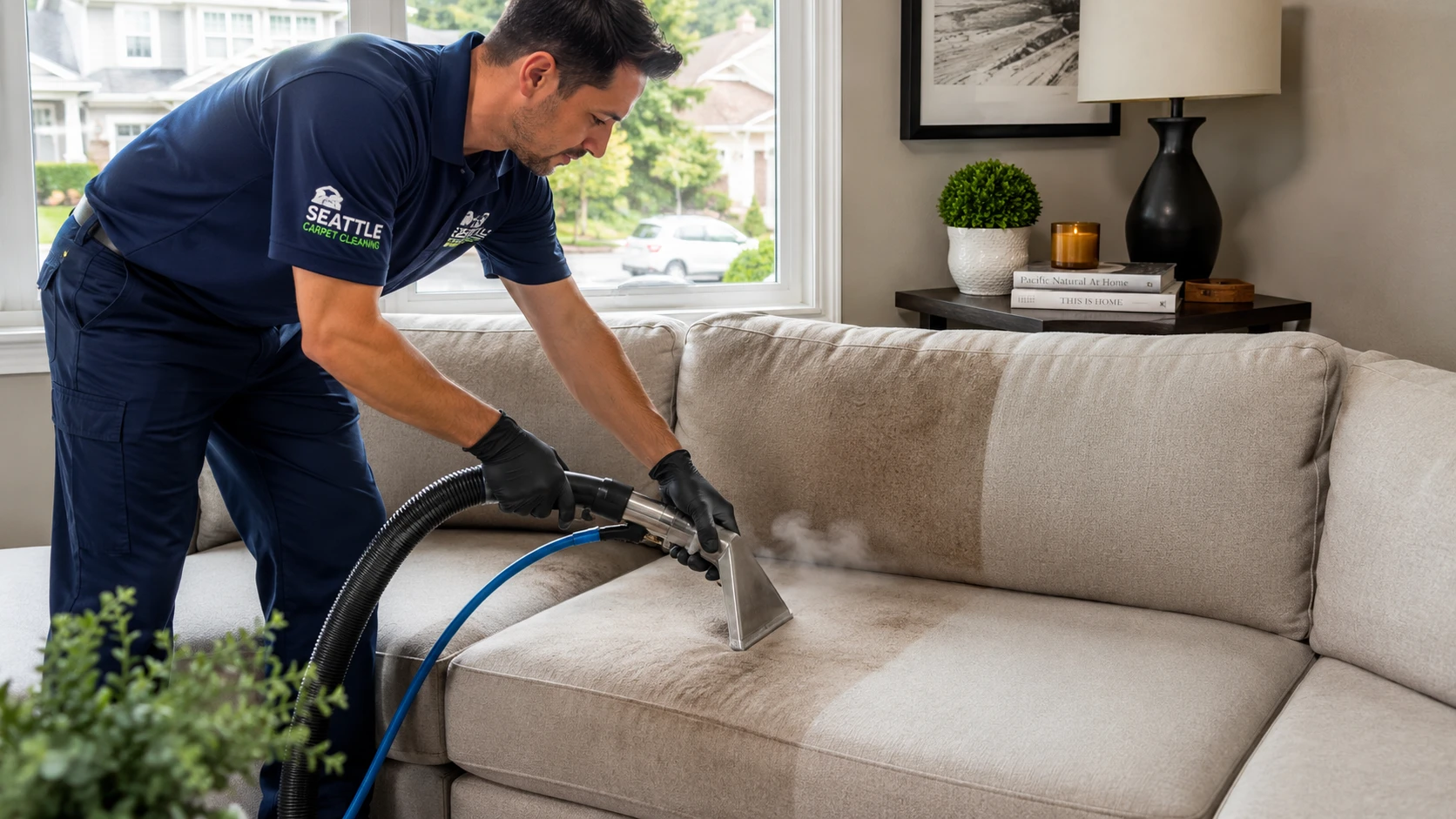
For homeowners in the greater Seattle area planning a living room or bedroom refresh, engaging a professional furniture cleaning service before purchasing new accessories is the sequencing that produces the best outcome per dollar spent. A complete living room set — sofa, loveseat, accent chairs — typically runs $300 to $500 for professional extraction. That investment changes the anchor piece of the room in ways that make every subsequent accessory decision more effective, because the base the accessories are working with is restored rather than compensated for.
In the Lynnwood and south Snohomish County market specifically, where Pacific Northwest humidity levels create conditions that accelerate biological accumulation in upholstery relative to drier climates, the maintenance interval matters. King County and surrounding areas see rainfall patterns that support year-round dust mite activity in fabric furniture — a factor that interior designers working in the region account for when advising clients on refresh schedules. Professional upholstery cleaning Lynnwood WA on an annual or biannual basis maintains the anchor piece of the room at a standard that makes the accessories around it work as intended, rather than requiring those accessories to compensate for a base that reads as worn before the refresh begins.