The Evolution of Home Upgrades & Automation
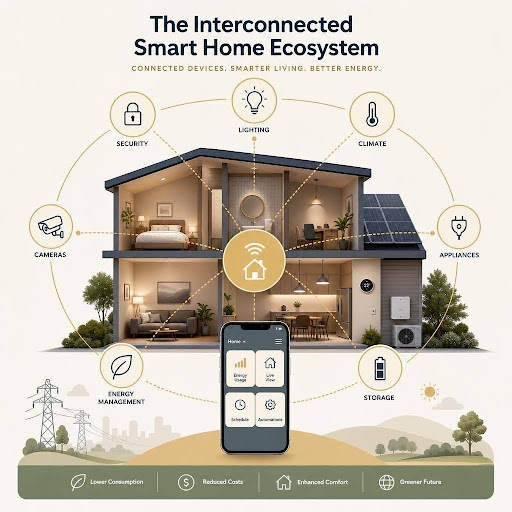
The journey towards intelligent living spaces has been a gradual yet accelerating process. What began as simple remote controls for individual devices has blossomed into sophisticated, interconnected ecosystems that manage everything from climate and lighting to security and energy consumption. This evolution is largely driven by advancements in smart panels, the proliferation of Internet of Things (IoT) devices, and the broader trends in grid modernization. Effective energy management, in particular, has emerged as a cornerstone of modern home automation, allowing us to not only enhance comfort but also significantly reduce our environmental footprint and operational costs.
Historical Milestones in Home Upgrades & Automation
Early forays into home automation were somewhat rudimentary, relying on proprietary technologies and often requiring complex installations. Systems like X10, introduced in the late 1970s, allowed for basic control of lights and appliances over existing electrical wiring. While for its time, X10 was limited in speed and reliability. The turn of the millennium brought more robust wireless protocols such as Zigbee and Z-Wave, which enabled devices to communicate more effectively, creating mesh networks that extended coverage and reliability. These standards laid the groundwork for the smart home devices we recognize today, allowing for greater interoperability between different manufacturers’ products.
More recently, the Matter standard, backed by major tech giants, promises to unify these disparate protocols, aiming for a truly seamless and universally compatible smart home experience. This ongoing drive for standardization is crucial, as it reduces complexity for homeowners and fosters innovation among manufacturers, ensuring that our smart homes can grow and adapt with new technologies.
The Modern Shift to Intelligent Infrastructure
Today, the focus has shifted from merely automating individual tasks to creating an intelligent home infrastructure that proactively manages its environment. At the heart of this shift are advanced smart panels and circuit-level control systems, exemplified by solutions like Savant Power. These systems move beyond simple smart plugs by integrating directly into a home’s electrical panel, offering granular control and real-time monitoring of energy consumption for every circuit.
This level of detail allows homeowners to understand precisely where their energy is going, identifying inefficiencies and opportunities for savings. Instead of merely turning lights on and off, modern systems can intelligently dim them based on natural light levels or occupancy. Smart breakers provide enhanced safety features, while the ability to monitor usage in real-time empowers us to make informed decisions about energy use. This comprehensive approach transforms the home’s electrical system into a responsive, intelligent network, capable of optimizing performance and adapting to dynamic energy demands and pricing structures.
Smart Power and Energy Management Systems
The concept of smart power in the home extends far beyond basic automation; it’s about intelligent energy management that adapts to our lifestyles, external conditions, and utility demands. With rising energy costs and an increasing focus on sustainability, optimizing how we consume, store, and even generate power has become paramount. Modern Home automation energy management systems integrate seamlessly with battery storage solutions, solar integration, and sophisticated load shedding capabilities, all while responding to dynamic Time-of-Use (TOU) pricing.
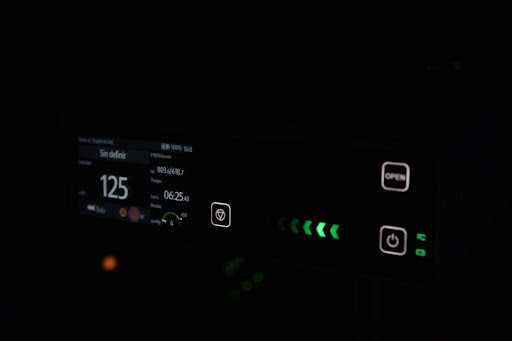
Our research indicates that commercial and industrial sectors have long benefited from advanced energy management systems, with some organizations achieving significant reductions in energy usage and associated costs. For instance, decreasing energy use by just 10% can lead to a 1.5% increase in net operating income for businesses. While these statistics are for larger entities, the principles of monitoring, control, and optimization are equally applicable and beneficial in a residential context. Homeowners can now leverage similar sophisticated tools to gain unprecedented insight and control over their energy footprint.
Optimizing Consumption with Home Upgrades & Automation
The core objective of smart power management is to optimize energy consumption without compromising comfort or convenience. This is achieved through several innovative features:
- Eco Mode: Many systems offer an “Eco Mode” that automatically prioritizes renewable energy sources (like solar) and stored battery power, especially during peak pricing hours. This mode can also intelligently adjust thermostat settings, dim lights, and manage appliance usage to minimize grid dependency and reduce costs. For example, a home in California might automatically switch from grid power to battery during the afternoon when TOU rates are highest, then recharge the battery overnight when rates are lower.
- Peak Shaving: This involves reducing electricity consumption during periods of high demand to avoid expensive peak-rate charges. Smart systems can automatically defer non-essential loads (like charging an electric vehicle or running a dishwasher) to off-peak hours or draw power from a home battery during these times. Industrial examples show that proactive load management can prevent penalty payments and maintain production continuity, a principle that translates directly to avoiding higher utility bills for homeowners.
- Circuit Prioritization: In the event of an outage or when optimizing for cost, smart panels allow homeowners to prioritize specific circuits. This means critical loads like refrigeration, medical equipment, or a home office can remain powered, while non-essential circuits might be temporarily shut down. This granular control ensures that essential functions are maintained, even when operating on limited power.
- Vampire Draw Elimination: Many appliances continue to draw small amounts of power even when turned off or in standby mode, a phenomenon known as “vampire draw.” Smart outlets and circuit-level monitoring can identify these culprits and automatically cut power to them when not in use, leading to cumulative savings over time.
By implementing these strategies, homeowners can achieve significant reductions in their monthly utility bills, mimicking the efficiency gains seen in larger commercial applications.
Resilience Against Grid Instability and Outages
Beyond cost savings, smart power systems provide crucial resilience against the increasing instability of electrical grids, particularly in regions prone to extreme weather or planned outages.
- Storm Watch: Features like “Storm Watch Mode” can automatically prepare a home for impending severe weather. This might involve fully charging backup batteries in anticipation of power outages, ensuring that the home is ready to seamlessly transition off-grid if necessary.
- Backup Batteries and Solar Integration: Combining solar panels with home battery storage is a powerful strategy for energy independence. Excess solar energy generated during the day can be stored and used at night, during peak hours, or when the grid goes down. This not only reduces reliance on the utility but also provides a reliable source of backup power. Our research highlights how battery storage allows solar energy to be saved and used during peak utility rates or power outages, a significant advancement from earlier solar systems that only provided power when the sun was out.
- Microgrids: For homes with solar and battery storage, the system can essentially create a “microgrid” during an outage, operating independently from the main utility grid. This ensures continuous power to the home, protecting against disruptions.
- Critical Load Management: During an outage, smart systems excel at managing critical loads. They can automatically shed non-essential circuits to extend the life of battery reserves, ensuring that essential functions remain operational for as long as possible. For instance, a home might automatically shut down pool pumps or exterior lighting to preserve power for the refrigerator and internet router. Real-world use cases show how custom “scenes” can prioritize specific circuits, such as those for large aquariums or medical equipment, during outages.
The integration of smart power and energy management systems transforms a home into an intelligent, resilient entity, capable of navigating the complexities of modern energy demands and environmental challenges.
Secure Entryways and Access Control
While energy management optimizes the internal environment, secure entryways and access control systems safeguard the perimeter, providing peace of mind and enhanced convenience. Modern smart security solutions move beyond traditional locks and alarms, integrating advanced technology to create a robust and intelligent defense for your home.
Integrating Security with Smart Home Ecosystems
The true power of modern security lies in its integration with the broader smart home ecosystem. This interconnectedness allows for sophisticated automation and personalized control:
- Smart Locks: These are foundational, allowing keyless entry via passcodes, fingerprints, or smartphone apps. They can also be remotely locked or unlocked, providing flexibility for guests or service providers. Beyond simple access, smart locks can integrate with other systems; for example, unlocking the door could disarm the alarm and turn on entry lights.
- Video Doorbells: Offering a live view of your front door, video doorbells allow two-way communication with visitors, even when you’re not home. They typically include motion detection and cloud recording, acting as a first line of defense and providing valuable surveillance.
- Biometric Scanners: For an added layer of security and convenience, biometric scanners (fingerprint or facial recognition) offer highly secure and personalized access. These eliminate the need for keys or codes, providing quick and secure entry for authorized individuals.
- Perimeter Security: This encompasses smart sensors for windows and doors, motion detectors, and smart cameras covering the exterior of the property. Integrated systems can trigger alarms, send notifications, and even activate smart lighting to deter intruders.
- Automated Scenes: Security can be woven into automated scenes. For example, a “Goodnight” scene might lock all doors, arm the security system, turn off all lights, and lower the thermostat. Conversely, an “Away” scene could lock doors, arm the system, and activate smart lighting to simulate occupancy.
- Geofencing: This technology uses your smartphone’s location to trigger actions. As you leave a defined perimeter around your home, the system could automatically arm the security, lock doors, and adjust climate settings. Upon your return, it could disarm the system and unlock the door.
- Remote Access and Monitoring: A central mobile app provides comprehensive control and monitoring from anywhere in the world. You can check camera feeds, lock/unlock doors, arm/disarm the alarm, and receive real-time alerts about any security events.
- Guest Credentials: Instead of sharing physical keys, smart systems allow you to issue temporary or scheduled access codes to guests, cleaners, or contractors. These can be revoked or modified at any time, providing superior control and security.
Hardware and Installation Best Practices
Implementing a robust security system requires careful consideration of hardware and installation. While many smart security devices are designed for DIY installation, professional integration often yields the best results, especially for comprehensive systems.
- Relay Modules: These are crucial components for integrating various electrical devices into a smart system. For instance, Savant Power’s relay modules allow for circuit-level control, which can be extended to power security cameras, automated gates, or specific lighting circuits that are part of a security scene. These modules ensure that even during power fluctuations, critical security components can be managed effectively.
- Low-Voltage Wiring: Many security components, such as sensors, keypads, and some cameras, operate on low-voltage wiring. Proper installation ensures reliable communication and power delivery, minimizing interference and maximizing system longevity.
- Power over Ethernet (PoE): For network cameras and other IP-based security devices, PoE simplifies installation by delivering both data and power over a single Ethernet cable. This reduces clutter and the need for separate power outlets, making for a cleaner and more efficient setup.
- Professional Integration: While individual smart locks or video doorbells can be simple to install, creating a cohesive, robust, and reliable security ecosystem often benefits from professional design and installation. Experts can ensure optimal placement of sensors and cameras, proper wiring, seamless integration with other smart home components, and configuration of complex automation rules. This also ensures that the system meets local safety and building codes.
By thoughtfully integrating secure entryways and access control into your smart home, you create a layered defense that is both highly effective and incredibly convenient, providing peace of mind whether you are home or away.
Comparing Smart Home Energy and Security Platforms
Choosing the right smart home energy and security platform involves evaluating various factors, from the level of control desired to the complexity of installation and ongoing maintenance. We can categorize solutions into broad types to understand their strengths and weaknesses.
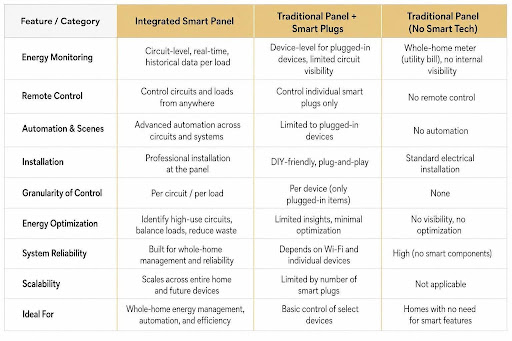
Here’s a comparison highlighting a comprehensive integrated solution like Savant Power against more traditional or basic smart home approaches:
Feature/Category Savant Power (Integrated Smart Panel) Traditional Electrical Panel + Basic Smart Plugs Traditional Electrical Panel (No Smart Tech) Energy Monitoring Circuit-level, real-time, historical data per load Device-level for plugged-in devices, limited circuit visibility Whole-home meter (utility bill), no internal visibility Energy Optimization Automated load shedding, Eco Mode, solar/battery integration, TOU management, critical load prioritization Manual unplugging, scheduling for smart plugs, no grid interaction None Resilience/Backup Seamless solar/battery integration, microgrid capability, Storm Watch Limited to UPS for individual devices, no whole-home backup Generator (manual transfer), no automatic grid independence Security Integration Deep integration with smart locks, cameras, alarms, automated scenes Limited to individual smart security devices, basic app control Separate, standalone security systems Control Interface Centralized app, wall keypads, voice control, automated scenes Multiple apps (one per brand), basic scheduling Manual switches, physical keys, separate alarm keypad Installation Complexity Professional installation required (electrical work) Mix of DIY (plugs) and professional (some security) Standard electrical installation, separate security installation Hardware Requirements Smart electrical panel, relay modules, battery inverters, solar inverter Smart plugs, smart bulbs, individual smart security devices Circuit breakers, wiring System Scalability Highly scalable, add modules for more circuits/features Limited by number of smart plugs/devices, potential app clutter Not applicable Cloud Dependency Moderate to high (for remote control, analytics, updates) Moderate (for app control, scheduling) Low (no smart features) Cost (Initial) High (due to comprehensive electrical system overhaul) Low to moderate (piecemeal device purchases) Low (standard installation) Long-term Value Significant energy savings, enhanced safety, resilience, property value Convenience for individual devices, some energy savings Basic functionality System Scalability
An integrated platform like Savant Power is designed for scalability. It allows homeowners to start with core energy management and then expand by adding more relay modules for additional circuits, integrating more solar capacity, or increasing battery storage. This modular approach ensures that the system can evolve with your needs and budget. In contrast, relying solely on basic smart plugs can lead to a fragmented system with multiple apps and limited overall control.
Installation Complexity
The level of integration directly correlates with installation complexity. While basic smart plugs are typically plug-and-play, comprehensive smart panel solutions require professional electrical installation. This ensures safety, compliance with building codes (such as California Title 24 requirements for energy efficiency), and optimal performance. The initial investment in professional installation for an integrated system is justified by its long-term benefits in efficiency, safety, and reliability.
Hardware Requirements
Integrated systems demand specialized hardware, including smart electrical panels, circuit-level relay modules, and sophisticated inverters for solar and battery storage. These components work together seamlessly to provide granular control and data. Basic smart home setups, on the other hand, primarily rely on individual smart devices like plugs, bulbs, and sensors, which operate more independently.
Cloud Dependency
Most modern smart home systems, especially those offering remote control, analytics, and over-the-air updates, have some degree of cloud dependency. Integrated platforms often leverage cloud-based dashboards for real-time energy monitoring and historical data analysis, allowing homeowners to track consumption, cost, efficiency, and forecasting. While this offers immense convenience and functionality, it also means that some features might be limited during internet outages. However, critical functions like local automation and backup power management are often designed to operate independently of an internet connection, ensuring resilience.
The choice depends on your priorities. For those seeking maximum control, efficiency, resilience, and seamless integration, a comprehensive smart panel solution offers unparalleled advantages. For simpler needs or budget constraints, a phased approach with basic smart devices can be a starting point, though it may lack the holistic benefits of a fully integrated system.
Frequently Asked Questions about Home Upgrades & Automation
Navigating smart home technology can raise many questions. Here, we address some of the most common inquiries regarding home upgrades and automation, particularly concerning energy management and secure entryways.
What are the first steps to implement Home Upgrades & Automation?
Embarking on the journey of home upgrades and automation begins with a clear understanding of your needs and priorities. We recommend starting with an assessment of your current home. Consider:
- Identify Pain Points: What problems are you trying to solve? High energy bills? Security concerns? Lack of convenience?
- Research and Education: Learn about the different types of smart home systems available, from individual smart devices to integrated platforms. Understanding the terminology and capabilities will help you make informed decisions.
- Prioritize: Decide which areas of your home automation are most important to you. Is it energy efficiency, security, or convenience?
- Budgeting: Determine your budget for initial investment and potential ongoing costs (e.g., subscriptions for cloud services).
- Consult Professionals: For comprehensive solutions like smart electrical panels or integrated security systems, consulting with qualified professionals is crucial. They can help design a system tailored to your home’s infrastructure and your specific goals. Starting with a clear plan ensures a smoother, more effective implementation.
How do smart energy management systems lower monthly utility bills?
Smart energy management systems reduce utility bills through a multi-faceted approach that optimizes consumption and leverages renewable energy sources:
- Real-time Monitoring & Analytics: They provide granular data on energy usage down to the circuit level. This transparency helps identify energy-hungry appliances or inefficient habits.
- Automated Optimization: Features like “Eco Mode” and “peak shaving” automatically adjust energy consumption based on Time-of-Use (TOU) rates, shifting non-essential loads to off-peak hours when electricity is cheaper.
- Solar & Battery Integration: By integrating with solar panels and home batteries, these systems allow you to store excess solar energy and use it when grid electricity is most expensive or unavailable, reducing reliance on the utility.
- Load Shedding: During periods of high demand or when operating on backup power, the system can automatically shut down non-essential circuits to conserve energy, extending battery life and reducing overall consumption.
- Vampire Draw Elimination: They can automatically cut power to devices that consume energy even when in standby, eliminating wasted electricity.
By proactively managing and optimizing every aspect of your home’s energy consumption, these systems empower you to significantly lower your monthly utility expenses and contribute to a greener environment.
Can smart entryway systems function during a power outage?
The functionality of smart entryway systems during a power outage depends heavily on their design and backup power provisions. We find that most modern systems are engineered with resilience in mind:
- Battery Backup: Many smart locks include internal battery backup, allowing them to function for extended periods even without grid power. Some video doorbells also have small internal batteries or can be wired to a home’s low-voltage system, which might be supported by a home’s overall battery backup system.
- Local Processing: Critical functions like unlocking doors via keypad or biometric scan often rely on local processing, meaning they don’t require an internet connection or cloud access to operate.
- Integrated Home Battery Systems: For homes equipped with a comprehensive energy management system that includes battery storage (like Savant Power), essential security components can be prioritized and seamlessly powered during an outage. This ensures that smart locks, security cameras, and alarm systems remain operational.
- Traditional Key Override: As a fail-safe, most smart locks still include a traditional key override, ensuring access even if all electronic components fail or batteries run out.
While some advanced features (like remote monitoring via app or cloud recording) might be temporarily unavailable during a prolonged internet outage, the core functionality of securing and accessing your home is generally maintained, especially with a well-designed and integrated system.
Conclusion
The modern home of July 2026 is an intelligent, interconnected ecosystem, where comfort, efficiency, and security are not just aspirations but integrated realities. We have explored how the evolution of home automation, from rudimentary controls to sophisticated smart panels, has empowered homeowners to take unprecedented control over their living environments.
By embracing smart power and energy management systems, we can optimize consumption, reduce utility bills, and build resilience against grid instabilities. Technologies like Eco Mode, peak shaving, and seamless solar-battery integration transform our homes into active participants in a sustainable energy future. Concurrently, advanced secure entryways and access control systems, featuring smart locks, video doorbells, and biometric scanners, provide robust protection and unparalleled convenience, all seamlessly integrated into the smart home experience.
The journey towards a fully modernized home is an ongoing one, but the tools and technologies available today offer a compelling vision of what’s possible. By making informed choices and considering integrated solutions, we can future-proof our homes, enhance our lifestyles, and contribute to a more sustainable and secure world. The convergence of smart tech and secure entryways is not just about convenience; it’s about creating living spaces that are truly intelligent, responsive, and aligned with the demands of our dynamic world.