A well-planned outdoor lighting system can make a property easier to navigate, more welcoming after sunset, and more useful for everyday life. Whether the goal is to improve a front entry, define a patio, or make steps easier to see, thoughtful landscape lighting begins with how people actually use the space.
The brightest property is not necessarily the safest or most attractive. Excessive brightness can create glare, hide hazards in nearby shadows, shine through windows, and make a relaxing outdoor area feel harsh. A better approach is to add light only where it improves visibility, comfort, or orientation.
Why Outdoor Lighting Needs a Plan
Adding fixtures one at a time without a layout often leads to uneven results. One corner may be intensely bright while a walkway remains dim, or decorative fixtures may compete with the lighting needed for steps and entrances. A simple plan keeps the finished space organized and easier to adjust over time.
Outdoor lighting affects more than curb appeal. It helps people walk from the driveway to the door, find gates and changes in elevation, use patios after sunset, and welcome guests without leaving them to search for the entrance. Planning also makes it easier to avoid light shining toward roads, neighboring homes, or indoor living spaces.
Start With a Nighttime Walk-Through
Before selecting a fixture style, walk around the property after dark. Bring a notebook or use a phone to mark areas that feel too dark, too bright, or difficult to navigate. A short survey can reveal practical issues that are almost invisible during daylight hours.
- Walk the route from the driveway, sidewalk, or street to the main entrance.
- Look for trip hazards such as steps, slopes, uneven paving, garden edges, and low branches.
- Notice existing light from streetlights, nearby buildings, windows, and neighboring properties.
- Stand at the patio, front door, and street to check where glare may occur.
- View the yard from inside the home to see whether future fixtures could shine into bedrooms or living areas.
Divide the Property Into Lighting Zones
Zoning turns a broad lighting project into a series of manageable decisions. Each part of the property has a different purpose, so it should not receive the same brightness, fixture type, or control setting.
- Arrival zone: Driveways, gates, walkways, porches, and front doors need clear orientation.
- Safety zone: Steps, retaining walls, slopes, and narrow side passages need even, low-glare visibility.
- Living zone: Patios, decks, outdoor kitchens, and seating areas benefit from soft, comfortable illumination.
- Feature zone: Trees, garden beds, fountains, walls, and architectural details can use restrained accent lighting.
- Security zone: Garages, service entrances, dark corners, and property edges may need controlled or motion-activated light.
Build a Layered Lighting Scheme
A balanced design usually combines several gentle layers rather than relying on a single powerful floodlight. Each layer serves a different visual and practical function.
- Path lighting helps people follow routes and recognize elevation changes.
- Ambient lighting creates a usable glow around porches, dining tables, patios, and gathering areas.
- Accent lighting highlights a focal point, such as a mature tree, a textured wall, a planting bed, or a water feature.
When these layers are used in moderation, the property feels more natural at night. Path lights can guide movement, ambient fixtures can support conversation, and accents can add depth without making the yard look cluttered or overly bright.
Choose Placement Before Fixture Style
Fixture placement has a greater effect on the result than decorative style alone. Aim lights away from seating areas, bedroom windows, and drivers’ eyes. Whenever possible, keep the light source itself out of direct view and focus the beam on the surface or feature to be illuminated.
For walkways, staggered fixtures can create a softer rhythm than rigid rows of evenly spaced lights. Avoid placing fixtures so close to shrubs or flowers that they will disappear as landscaping grows. Also consider maintenance access for cleaning lenses, replacing components, trimming plants, and checking wiring connections.
Use Shielding, Warm Light, and Smart Controls
Responsible lighting is useful, targeted, low-level, controlled, and warm-colored. These principles, outlined in DarkSky’s guidance for responsible outdoor lighting, provide a practical standard for reducing glare, skyglow, and unnecessary spill while preserving visibility where it matters.
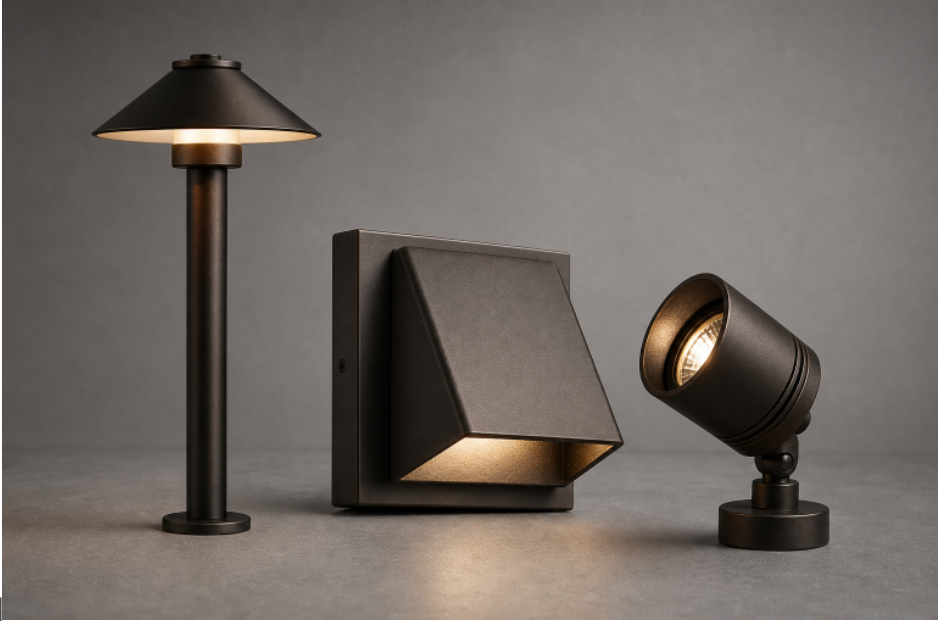
- Choose fixtures with shields, hoods, or recessed light sources.
- Use warm color temperatures in gardens, patios, and residential gathering areas.
- Set timers for predictable evening use.
- Install motion sensors where temporary visibility is more useful than all-night lighting.
- Add dimmers when an area needs different settings for entertaining, late-night use, and arrivals.
Compare LED Efficiency and Long-Term Use
LEDs can reduce energy use, but the fixture is only one part of the equation. Operating hours, beam direction, controls, and maintenance needs all affect long-term performance. When comparing options, review lumens, wattage, color temperature, beam spread, weather rating, and the availability of compatible transformers or replacement parts.
The U.S. Department of Energy’s exterior lighting efficiency guidance is a useful reference for understanding how efficient fixtures and lighting controls can work together. Estimate how often each zone will operate during a typical week before selecting equipment.
Match Light Levels to the Task
There is no single brightness level that suits every outdoor area. Walkways need clear edge definition, while steps need even lighting that minimizes shadowing. Dining areas need enough light to see faces, food, and table settings, but not so much that the atmosphere feels clinical. Garden accents can remain subtle, and security areas may be better served by motion activation than constant brightness.
Common Outdoor Lighting Mistakes
- Using one bright floodlight to cover the entire property.
- Leaving bulbs visible from seating areas, streets, or windows.
- Keeping every fixture on throughout the night.
- Mixing several color temperatures without a clear reason.
- Ignoring future plant growth and seasonal maintenance.
- Testing the design only from outside, not from inside the home.
A Simple Planning Checklist
- List the areas where people need visibility after dark.
- Separate safety, living, features, and security needs.
- Mark existing light sources and likely glare concerns.
- Select fixture locations and beam directions before buying fixtures.
- Choose a consistent warm color temperature where appropriate.
- Add timers, dimmers, or sensors based on each zone’s use.
- Test the result in the dark and reduce the brightness before adding more fixtures.
Questions Readers May Have
Should Every Path Be Lit?
No. Prioritize primary walking routes, steps, gates, and grade changes. Decorative lighting can be added later if it supports the design without creating glare or visual clutter.
Are Warm LEDs Better for Outdoor Areas?
Warm LEDs often feel more comfortable in residential spaces and can create a calmer transition between indoor and outdoor living areas. The right choice still depends on the location, intended use, and visibility needs of each zone.
How Often Should Outdoor Lighting Be Checked?
Inspect the system seasonally for loose fixtures, blocked lenses, damaged wiring, water entry, plant growth, and changes in beam direction. Small adjustments can keep the design effective as the landscape changes.
Conclusion
Effective outdoor lighting balances safety, comfort, appearance, energy use, and respect for the nighttime environment. Start with how people move through and enjoy the property, then add light only where it has a clear purpose. Well-placed, shielded, and controllable fixtures can make outdoor spaces feel inviting without becoming harsh, wasteful, or difficult to live with.