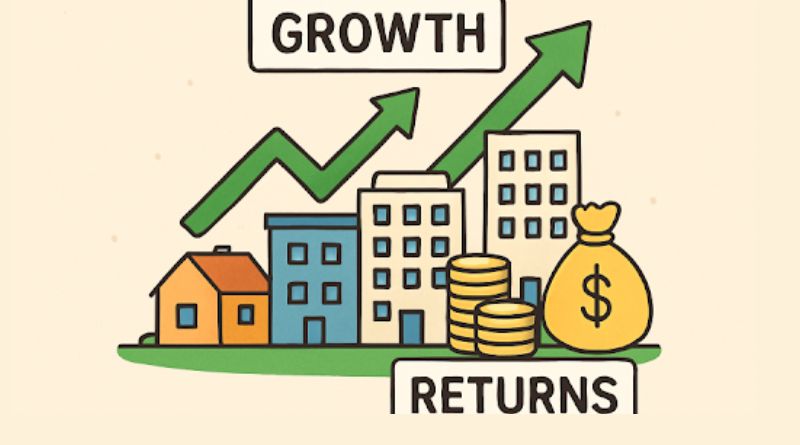
Real estate is one of the most time-tested paths toward long-term financial security. Whether you are new to the field or looking to build on an established portfolio, informed choices and a well-defined strategy are crucial. By using strategic methods such as value appreciation, diversification, and tax benefits, investors can generate significant, sustainable returns from real estate investing. Exploring these options lays the foundation for long-term wealth accumulation.
Rental properties, commercial investments, and even sustainable buildings all play unique roles in an effective real estate strategy. Moreover, market trends reveal how evolving opportunities shape decision-making for novice and seasoned investors. Understanding each aspect is essential for seeing the big picture in long-term real estate success. This knowledge ultimately puts investors in the best position not just to earn a steady income but also to build lasting wealth through property investment.
Generating Passive Income Through Rental Properties
One of the key advantages of real estate investment is the opportunity for reliable, mostly passive income. By acquiring residential, commercial, or mixed-use rental properties, investors can create robust monthly revenue streams. In established markets, strong tenant demand often ensures high occupancy rates, helping owners cover mortgage payments and still receive profit. Rental properties thus serve as a dependable foundation for an investment portfolio, allowing you to build wealth steadily over time.
Choosing the right property and conducting due diligence are crucial for optimizing rental yields. According to a report by Britannica Money, understanding local market trends and property management strategies is crucial to maximizing your return on investment. Factors such as neighborhood, amenities, and lease structure can directly affect profitability and the potential for passive income.
Appreciation: Building Wealth Over Time
Over the long term, real estate has proven its ability to appreciate. Well-chosen properties appreciate due to improvements, economic growth, and increased demand. This growth not only increases the property’s value but also enhances overall portfolio health. Real estate has historically presented lower volatility and higher risk-adjusted returns than stocks or bonds, making it appealing for those looking to hedge against inflation and market swings.
Successful investors allow their assets to mature. Patience is essential, as the real estate market rewards those who can ride out fluctuations and let property values build steadily. Relying both on rental income and property appreciation creates a powerful dual return on capital that few other asset classes match.
Leveraging Financing to Amplify Returns
One of the unique benefits of real estate is the ability to use leverage. Through mortgage financing, investors can acquire substantial assets with a relatively modest cash outlay. For example, using a loan for 75% of the property’s value at a moderate interest rate allows individuals to earn considerable returns on their invested capital. This approach amplifies gains as the property’s value increases and rents rise.
However, leveraging must be done responsibly. While financing can magnify gains, it can also increase risk. Analysis of cash flow, debt coverage ratios, and interest rates ensures that leverage works for you rather than against you. Understanding these financial fundamentals is critical for maximizing returns without exposing your investment to unnecessary risk, as noted by Kiplinger.
Tax Advantages Enhance Profitability
One of the biggest benefits of real estate investing lies in its tax advantages. Investors can deduct property taxes, mortgage interest, operating costs, and even depreciation. Depreciation, in particular, allows property owners to recognize the gradual wear and tear on a building as an annual expense, even as the asset might be appreciating in market value.
These incentives can lead to substantial tax savings year after year. Lowering your tax bill provides more capital for reinvestment, portfolio growth, or simply an improved net profit from your property. Opportunities such as 1031 exchanges can also allow the transfer of gains from one investment property to another, all while deferring capital gains taxation until a final sale. Consulting a tax specialist ensures that you fully utilize these benefits for optimal after-tax returns.
Diversification: Mitigating Risk
A smart real estate strategy involves diversification. By investing across different property types (residential, commercial, industrial) and various geographic markets, you reduce your exposure to localized risk. Real estate’s historically low correlation with the stock market means it can stabilize returns during times of financial volatility.
Diversification cushions the impact of market downturns or changes in tenant demand in any one area. This holistic approach allows investors to weather economic changes while maintaining overall portfolio strength, laying the groundwork for enduring returns.
Embracing Sustainable Investments
The demand for eco-friendly and energy-efficient properties is on the rise. Sustainable real estate investments, featuring green building certifications and modern appliances, attract environmentally conscious tenants and often command higher rents. Moreover, these features can yield tax incentives and reduce operating costs, providing both environmental and financial rewards.
As more markets adopt green building standards, investors who prioritize sustainability position themselves for both greater property value appreciation and increased rent potential. This long-term perspective ensures continued relevance and profitability in a changing market.
Staying Informed on Market Trends
Being aware of current and upcoming real estate trends is vital. For instance, the surge in demand for data centers and logistics facilities, driven by the rise of e-commerce and digital infrastructure, signals emerging investment opportunities. Proactive investors monitor demographic shifts, technological advancements, and economic policy changes to anticipate lucrative sectors.
Keeping up with evolving trends allows you to move with the market rather than against it. Dedicated research and a flexible strategy ultimately help uncover hidden potential and capitalize on shifts that drive future returns.
Implementing these strategies sets the stage for long-term, resilient gains in real estate. An informed and strategic approach, built around diversification, tax efficiency, sustainability, and ongoing market research, positions investors to maximize returns from property assets.