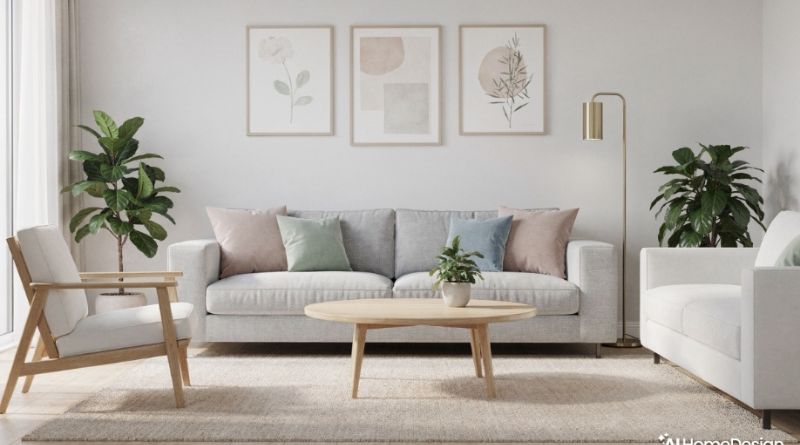
Empty living room ideas often seem simple at first, but an empty space can be harder to plan than expected. The room looks open, yet layout, scale, and purpose can be difficult to judge without anything in place.
That is why inspiration often stalls at the point of action. Too many possibilities compete at once, and the room offers little guidance about what should come first.
Why Empty Living Rooms Feel So Hard to Plan
Living room layout ideas are easier to picture in finished rooms than in empty ones. A bare room offers freedom, but it also removes the visual cues that make early decisions feel more grounded.
On social media or in styled interiors, layout ideas look convincing because furniture, lighting, and scale are already working together. In a real empty room, that context is still missing. The challenge is not only visual.
A living room is also a space people move through, pause in, and gather around, and those patterns are harder to judge before anything is in place.
Why People Often Make Layout Decisions Too Late
When a room feels hard to read, many people move ahead without a clear plan. They focus on getting the basics in place first and assume the layout will come together later.
At that stage, moving forward often feels easier than pausing to solve a room that still feels unclear. That habit often creates problems later. Furniture arrives before spacing has been tested, and the room begins to react to purchases instead of guiding them.
Each piece solves one immediate need, but it also narrows the next decision. As a result, a setup that feels acceptable at first can start to look awkward once daily use reveals what the room actually needs.
Start With Understanding the Room Before Trying to Fill It
Some living rooms need to support conversation, some need to center around a screen or a view, and others need to preserve open movement because of nearby doors or a connection to another area.
Once the room’s role becomes clearer, decisions start to feel more grounded. Many people searching for empty living room ideas turn to Pinterest, Instagram, or similar sources for inspiration.
The difficulty is that those images show finished outcomes, not rooms at the stage where decisions still feel uncertain. What looks convincing in one space does not always translate well to another. Those ideas only start to help once they are tested against the actual room.
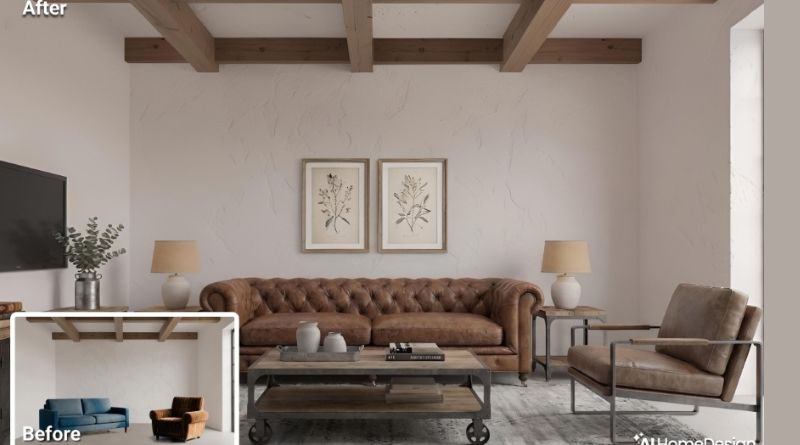
The question shifts from what looks appealing in general to what fits the space. A clearer plan often starts with the focal point, then moves to circulation, openness, and proportion.
That makes it easier to see where the room needs more visual weight and where it needs more space.
Why Visualization Makes the Room Easier to Understand
Some decisions remain difficult until the room gains context. Visualization helps by showing the space as a lived-in environment before purchases begin to lock the layout into place.
A furnished preview changes the way the room reads. Scale becomes more visible, spacing is easier to check, and the balance of the room is no longer left to guesswork.
Tools such as AI virtual staging can make those early layout decisions more concrete by placing realistic furniture previews inside the actual room.
That makes it easier to compare one direction with another and to notice when a setup feels too heavy, too sparse, or visually unclear. It also helps answer early how to arrange living room questions before decisions become expensive to reverse.
Visualization does not do the planning for the room. It simply gives the decision-making process something concrete to work with.
A Smarter Way to Compare Options Before Buying Furniture
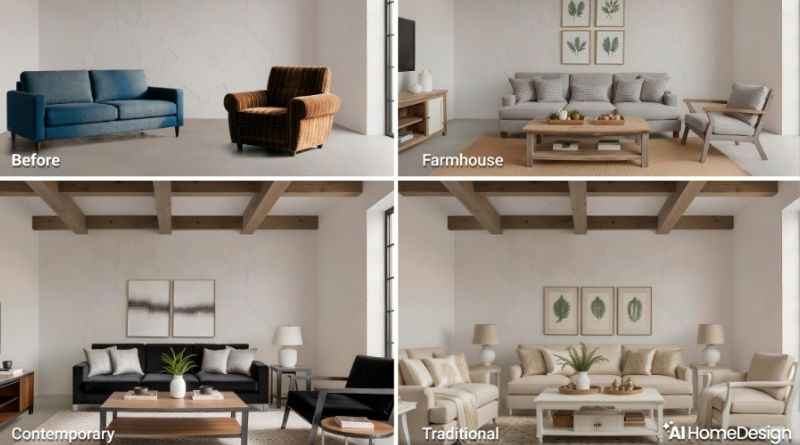
One layout can feel convincing when there is nothing to compare it with. Once a second or third option enters the picture, the differences become easier to spot.
One arrangement may leave clearer movement paths, another may give the room stronger definition, and a third may bring the main seating area into a more connected grouping.
Seeing several empty living room ideas for the same room shifts the process from instinct to comparison. With AI HomeDesign, different directions can be tested before major purchases begin to shape the layout.
Seeing options side by side makes the stronger layout easier to spot and the weaker ones easier to dismiss. It also helps clarify furnishing decisions before the room becomes shaped by choices that are harder to reverse.
Confidence Comes From Clarity, Not From Filling the Room Fast
An empty living room feels difficult for a reason. It asks for decisions before it offers enough visual support in return. That does not mean the space lacks potential.
It means the layout needs to be understood before anything begins to fill it. Visualization tools help by giving those ideas something real to work against. The space becomes easier to read, and decisions feel less like guesswork.
From there, the process feels less scattered and more grounded. Fewer choices get made on impulse, and the space is more likely to feel intentional from the start.
FAQs
What helps me visualize a room layout more clearly?
Seeing the room with context makes a major difference. Realistic previews of different layout options make it easier to judge movement, proportion, and overall balance in the same space.
Why is an empty living room harder to design?
An empty living room lacks visual anchors, so scale, spacing, and balance are harder to judge. The room looks open, but its structure is not yet clear, which makes early decisions feel uncertain.
How do visualization tools help with living room planning?
Visualization tools provide a furnished preview of the room, which makes it possible to compare layout options and assess how the space will function before committing to any changes.
Do room design visualization tools understand room scale correctly from a photo?
It depends on the tool and the quality of the photo. Strong visualization tools can estimate room geometry, perspective, openings, and visible spatial relationships with useful accuracy, but results still depend on image quality and should be treated as planning support rather than exact measurement.