Disposing of old appliances can feel overwhelming, especially when you’re unsure about the most responsible way to get rid of them. With mounting concerns about landfill overflow and environmental pollution, it’s crucial to prioritize safe appliance removal that protects your home and the planet. By pursuing sustainable options, you can simplify the process while actively reducing your ecological footprint.
Improper disposal of appliances—such as refrigerators, washing machines, and air conditioners—can introduce hazardous materials into the environment, posing risks to both human health and natural resources. Learning and practicing eco-friendly disposal not only keeps your home clutter-free but also ensures outdated or broken appliances do not contribute to growing pollution or resource depletion.
The growth of responsible appliance disposal options means it’s easier than ever to follow eco-conscious habits. Many localities and organizations have developed user-friendly programs for removing, recycling, or donating appliances, which streamlines the process and provides reassurance that your items are being handled correctly. By taking the right steps, you turn an inconvenient chore into an opportunity for positive environmental impact.
When seeking the best disposal method, it is essential to research available services, review their certifications, and verify that hazardous materials are handled appropriately. Proactive preparation and informed choices help preserve resources for future generations, while also freeing up space in your home.
Understanding the Environmental Impact
When appliances end up in landfills or are discarded improperly, they can leak refrigerants, heavy metals, and other toxic substances into the earth. According to the U.S. Environmental Protection Agency (EPA), responsible appliance disposal has helped prevent over 40 million metric tons of greenhouse gas emissions—an amount equivalent to the annual energy consumption of nearly eight million homes. Source: Leaching chemicals from appliances can pollute water supplies, damage soils, and harm wildlife, highlighting the need for stringent disposal protocols. Improper handling also poses health risks to nearby communities, as airborne pollutants and contaminated groundwater can spread beyond landfill sites. Recycling or refurbishing old appliances ensures that valuable materials, such as copper, steel, and aluminum, are recovered and reused, thereby reducing the demand for new resource extraction. By promoting proper disposal practices, both individuals and businesses can play a vital role in protecting the planet and conserving natural resources for future generations.
Eco-Friendly Disposal Methods
Certified Recycling Programs
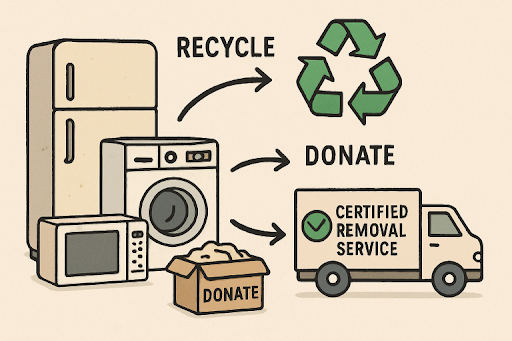
Many municipalities and private companies offer appliance recycling programs accredited by state or federal agencies. These programs meticulously dismantle units, prevent the escape of harmful substances, and extract valuable metals and plastics for reuse and recycling. Choosing a certified recycler safeguards the process from start to finish, increasing resource recovery and minimizing pollution.
Donation to Charities and Non-Profits
If your appliance is still functional, donating it to an organization like Habitat for Humanity or Goodwill helps families in need and extends the item’s lifespan. Many charities will collect appliances directly, making the process simple and impactful. Always check their condition guidelines to ensure your donation is suitable.
Manufacturer Take-Back Programs
Some appliance manufacturers and retailers provide incentives for consumers to return old units when buying new ones. These take-back programs ensure appliances are recycled or disposed of according to strict industry and environmental standards—often as part of a trade-in or appliance buy-back initiative.
Benefits of Professional Removal Services
Opting for experienced appliance removal companies provides convenience, peace of mind, and safety. These services are equipped to handle everything from heavy lifting and secure loading to transportation and final disposal. Professionals adhere to environmental regulations, ensuring hazardous components like refrigerants or mercury switches are dealt with safely, reducing your liability and effort in compliance.
- Convenience: No heavy lifting, dismantling, or difficult logistics for homeowners—experts manage the full process.
- Eco-Friendly Assurance: Trusted services prioritize recycling and ethical disposal, guaranteeing minimal environmental impact.
- Health & Safety: Trained staff properly to isolate hazardous materials, protecting your household and community.
Preparing Appliances for Disposal
- Unplug and Clean: Remove appliances from all power or water connections, and thoroughly wipe away residue or debris inside. This makes units safer to handle and prepares them for donation to charity, if applicable.
- Secure or Remove Loose Parts: Doors, hoses, bins, and trays should be taped in place or removed to prevent breakage or injury during moving and transport.
- Comply with Hazardous Material Protocols: For appliances containing refrigerants, coolants, or other hazardous chemicals, research your local regulations to determine if certified professionals are required for removal. Many areas need special treatment before recycling, especially for items such as refrigerators and air conditioners.
Recycling and Donation: Giving Appliances a Second Life
Recycling and donating large or small appliances divert tons of valuable materials from landfills while reducing the demand for new raw resources. For example, recycling just one refrigerator conserves enough energy to power a typical household for up to four months. Source: When donors and recyclers work in tandem, communities benefit from decreased waste, more resourceful charitable programs, and cleaner environments overall. Additionally, many nonprofit organizations refurbish donated appliances to support families in need, extending the lifespan of usable goods. This process not only lessens the environmental burden but also fosters social responsibility and community development. Encouraging appliance recycling and donation initiatives can create a sustainable cycle where environmental preservation and community support are mutually beneficial.
Conclusion
Thoughtful appliance disposal is a crucial component of modern sustainability. Taking a little extra care when removing or replacing your appliances ensures pollutants don’t enter ecosystems, and valuable materials are reused instead of wasted. Whether you choose certified recycling, charitable donation, or the convenience of a reputable removal service, embracing eco-friendly methods supports healthier homes and communities—while keeping the planet cleaner for future generations.