Key Takeaways
- Routine maintenance helps commercial HVAC equipment operate more reliably, with fewer unexpected interruptions.
- A useful checklist covers filters, airflow, controls, drains, coils, electrical components, safety devices, and service records.
- Maintenance frequency should reflect equipment type, building occupancy, operating hours, dust exposure, and manufacturer guidance.
- Tracking comfort complaints, energy use, repeat repairs, and downtime helps facility teams spot patterns early.
A well-run commercial HVAC maintenance plan is not just a mechanical task list. It is part of keeping a building comfortable, productive, safe to operate, and prepared for changing weather throughout the year.
When filters, drains, sensors, coils, or controls are neglected, the system may still appear to work while using more energy or putting extra strain on major components. A written checklist gives facility teams a consistent way to find small issues before they become disruptive repairs.
Preventive maintenance is generally more useful than a run-to-failure approach. Waiting for equipment to fail can lead to emergency calls, uncomfortable occupants, business interruptions, and rushed repair decisions. Planned checks also make it easier to document responsibility and follow up on unresolved conditions. Before assigning tasks, create a complete equipment inventory. Include each unit’s type and location, manufacturer, model number, estimated age, refrigerant type when applicable, areas served, last service date, repair history, and recommended maintenance intervals from the equipment manual. Although the priorities differ by building, the same basic habits also apply to residential HVAC equipment: clear airflow paths, clean filters, accurate controls, and early attention to leaks or unusual noises can prevent avoidable problems.
Daily And Weekly Visual Checks
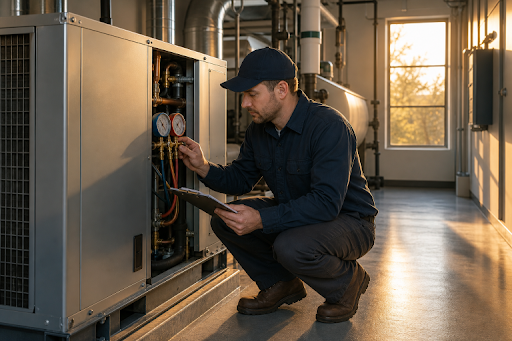
Trained building staff can complete simple visual checks without opening sealed components, working on live electrical parts, or handling refrigerant. These observations provide useful information for the next service visit.
- Look for water near indoor units, drain pans, drain lines, and mechanical rooms.
- Listen for grinding, buzzing, rattling, or repeated starting and stopping.
- Review control panels for alarms, fault codes, or warning lights.
- Confirm that supply and return grilles are not blocked by furniture, storage, or debris.
- Record repeated hot, cold, humid, stuffy, or odor-related complaints by location.
- Check outdoor equipment for leaves, trash, standing water, damaged panels, or blocked airflow.
Monthly Maintenance Tasks
Monthly tasks vary by system design and building conditions. Still, they should include a review of filters, thermostat settings, equipment schedules, building automation alerts, accessible belts and pulleys, condensate drains, and outdoor-air dampers. Filters may need attention more often in dusty spaces, high-occupancy facilities, restaurants, or buildings with extended operating hours. Facility teams should also compare recent runtime and utility trends with normal patterns. A gradual increase in operating time can indicate a dirty coil, an airflow restriction, a sensor problem, a scheduling error, or a damper that is not moving correctly. Effective operations and maintenance practices can reduce waste by ensuring equipment runs only when conditions require it, as outlined in periodic reviews of HVAC schedules and temperature setpoints.
Seasonal HVAC Preparation
Professional service before the busiest heating or cooling period is often more practical than waiting for the first major demand day. Seasonal preparation should focus on the components most likely to work hardest in the months ahead.
Before Cooling Season
- Clean outdoor coils and remove vegetation or debris that restricts airflow.
- Evaluate refrigerant performance and investigate signs of a leak or incorrect charge.
- Test condenser fans, compressors, electrical connections, and safety controls.
- Inspect drain pans and condensate lines for buildup or restricted flow.
- Verify cooling schedules, thermostat settings, and zone controls before peak use.
Before Heating Season
- Inspect burners, ignition components, heating elements, or heat exchangers as applicable.
- Test limit switches and other safety devices.
- Check blower performance, belts, and airflow across occupied zones.
- Inspect flue paths and combustion air provisions on fuel-burning equipment.
- Confirm thermostat changeover settings and heating schedules.
Indoor Air Quality And Ventilation Checks
HVAC maintenance affects indoor conditions because the system moves air, manages temperature, and often helps control humidity. Blocked filters can reduce airflow, while moisture around coils or drain pans can create persistent maintenance concerns. Outdoor-air intakes and exhaust paths should remain clear, and recurring complaints should be logged with the time, location, weather, and equipment operating status. Facility managers can use the EPA’s guidance on identifying and resolving indoor air quality problems in commercial buildings to organize observations involving ventilation, moisture, odor, and occupant concerns. This information supports a systematic response without assuming that every comfort complaint has the same cause.
Energy Waste Maintenance Can Help Prevent
Energy waste is often gradual. A building can feel acceptable even when HVAC equipment is running longer than necessary. Common causes include dirty coils, clogged filters, leaking ducts, damaged insulation, drifting sensors, incorrect schedules, stuck dampers, failed economizer controls, and short cycling. Reviewing controls is as important as cleaning equipment, since a properly maintained unit can still waste energy if it operates after hours or receives poor instructions from the building automation system.
Warning Signs That Need Professional Attention
- Repeated shutdowns, short cycling, or continuous operation.
- Burning odors, unusual electrical sounds, or tripped breakers.
- Water leaks that return after basic drain cleaning.
- Large temperature differences between nearby zones.
- Weak airflow from multiple vents or repeated refrigerant-related service calls.
- A sudden, unexplained rise in energy use or frequent occupant complaints.
How Often Should Commercial HVAC Service Be Scheduled?
There is no single schedule that fits every commercial building. Light-use offices may need routine observations and seasonal professional service. In contrast, retail sites, restaurants, industrial spaces, and facilities with sensitive ventilation needs often require more frequent checks of filters, airflow, and controls. Follow the manufacturer’s guidance, then adjust the plan based on occupancy, exposure to contamination, system age, and actual operating conditions.
What A Strong Service Report Should Include
Every visit should produce a clear record with the date, equipment identification, measurements taken, work completed, parts replaced, safety tests performed, photos of notable conditions, recommended repairs ranked by urgency, and a follow-up date. Over time, these records make repeat failures and rising maintenance costs easier to identify.
Final Checklist For Facility Managers
- Maintain an accurate equipment inventory and service history.
- Assign daily, monthly, and seasonal tasks to appropriate staff.
- Train personnel to perform safe visual checks and document concerns.
- Schedule qualified professionals for electrical, combustion, refrigerant, and diagnostic work.
- Review comfort complaints, downtime, utility use, and repeat repairs each quarter.
- Update the plan when occupancy, building use, controls, or equipment changes.
A commercial HVAC maintenance checklist works best when it becomes part of normal building operations. Consistent observations, timely professional service, and complete records can support steadier comfort, better equipment reliability, and fewer costly surprises.
Conclusion
A consistent commercial HVAC maintenance routine can help businesses maintain comfortable spaces, identify developing problems, and reduce avoidable downtime. By combining regular visual inspections, scheduled professional service, seasonal preparation, and accurate maintenance records, facility teams can address issues before they become major disruptions. Reviewing equipment performance, energy use, and recurring complaints also helps refine the maintenance plan over time. The goal is not simply to keep HVAC equipment running but to create a dependable system that supports efficient, comfortable, and productive building operations year-round.