The door most of us use every day
For a lot of households, the garage door is the front door. It’s how you leave for work, how groceries come in and how the car gets out in a hurry. Most of us never think about it until the power cuts out and the opener button does nothing.
Outages are no longer rare events. Winter storms, summer heat waves and planned utility shutoffs during high-wind wildfire weather can leave neighborhoods dark for hours or days. If your car is parked inside and you need to evacuate, pick up a child or get to a pharmacy, a dead opener becomes a real problem.
The good news: every automatic garage door can be opened by hand, and a few minutes of preparation now makes the process simple and safe later. Here’s what to know.
How to open your garage door by hand
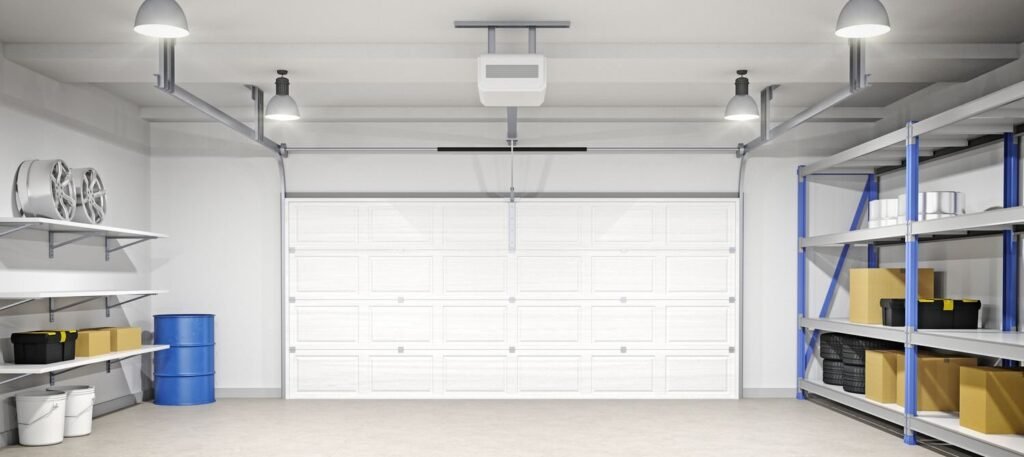
Every residential opener has an emergency release: usually a red cord with a handle hanging from the trolley on the overhead rail. Pulling it disconnects the door from the motor so you can lift it yourself.
- Make sure the door is fully closed. If you pull the release while the door is open or partly open, it can drop suddenly, especially if a spring is worn or broken.
- Pull the red cord straight down, then back toward the motor if your model requires it. You should hear or feel the trolley disengage.
- Lift the door from the bottom center, using your legs, not your back. A properly balanced door should feel fairly light and stay put about halfway up.
- Lock it open or closed. If the door won’t stay up on its own, prop it securely or ask for help. Use the manual slide lock on the inside of the door to secure it closed while the power is out.
- Reconnect when power returns. Pull the cord again (or toward the door, depending on the model) and run the opener. The trolley will usually snap back into place on its own.
Stop if the door feels extremely heavy. A door that seems impossible to lift almost always means a broken torsion or extension spring. Garage door springs hold enormous tension, and lifting a door without them, or trying to adjust them yourself, is a leading cause of serious garage door injuries. Leave the door closed and call a professional.
Why battery backup openers matter
The simplest fix is an opener that keeps working when the grid doesn’t. Battery backup openers store enough charge for a number of open-and-close cycles during an outage, so you don’t have to touch the emergency release at all.
This isn’t just a convenience feature. After the 2017 wildfires in Northern California, where some residents struggled to get vehicles out of garages during evacuations, California passed a law (SB 969) requiring residential garage door openers sold or installed in the state from July 1, 2019 to include battery backup. Wherever you live, it’s a smart standard to follow.
When shopping for a backup opener, look for:
- Real-world cycle capacity, so you know how many trips you can make on a single charge
- Automatic charging and a low-battery alert, since backup batteries typically need replacing every few years
- A quiet DC motor, which most battery-backup models use and which is gentler on the door over time
- Smart features you’ll actually use, such as app alerts that tell you the door was left open
If your opener is more than 10 to 15 years old, replacing it with a backup model is often a better investment than repairing it.
A 10-minute pre-outage checklist
Do this before storm or fire season, not in the dark with a flashlight in your teeth.
- ☐ Find the emergency release cord and make sure everyone in the household knows what it does
- ☐ Practice a manual open and reconnect once while the power is on
- ☐ Run a balance test: disconnect the opener, lift the door halfway and let go. It should stay roughly in place. If it slides down or shoots up, the springs need adjusting
- ☐ Check that the inside slide lock moves freely so you can secure the door during a long outage
- ☐ Test your backup battery by unplugging the opener and running the door
- ☐ Keep a flashlight or headlamp near the garage entry door
- ☐ Consider parking facing out during high-risk weather so you can leave quickly
When to call a professional
Most outage prep is DIY-friendly, but some problems are not. Call a garage door technician if:
- The door is very heavy, uneven or won’t stay halfway up
- You see a gap in a torsion spring above the door, or frayed lift cables
- The door has come off its track or the rollers are bent
- The release cord is missing, or the trolley won’t reconnect
A routine tune-up once a year, covering springs, cables, rollers and opener settings, catches most of these issues before they strand you.
The bottom line
Power outages are a fact of life, but being trapped by your own garage door doesn’t have to be. Learn the manual release, test your door’s balance and consider an opener with battery backup. A few minutes now means that when the lights go out, you can still get where you need to go.
About the author
Colin Thomas is the owner of A1A Garage Door Services, a licensed and insured garage door company serving Marin County and the San Francisco Bay Area. He specializes in garage door installation, spring and opener repair, and safety inspections Contact Us.