A hot tub can turn a Salt Lake City backyard, patio, or sheltered side yard into a comfortable place to unwind after a long day. The best choice is rarely the biggest model or the one with the longest feature list. It is the one that fits your household, your available space, and the way you expect to use it through changing Utah weather.
Start by considering how many people will use the spa most often, rather than shopping by maximum capacity alone. Homeowners comparing compact and small hot tubs for Salt Lake City homes may find that a smaller footprint delivers a more practical daily experience than a larger tub that is difficult to access, heat, or maintain.
Start With How the Hot Tub Will Be Used
Think about the real purpose of the purchase. A couple seeking a quiet evening soak may prefer two deep, supportive seats and a smaller water volume. A family may benefit more from open bench seating that allows people to move around comfortably. If you expect to host neighbors or relatives, prioritize entry space, legroom, and an easy traffic flow around the tub. Your usual use also affects privacy needs, lighting, jet placement, and how close the spa should sit to the house.
Choose a Size That Fits Real Life
Compact tubs work well for one or two regular users and patios with limited room. Medium sizes offer flexibility for couples, small families, and occasional guests. Larger tubs can suit frequent gatherings, but they require more installation space and may be unnecessary for a household that usually soaks with only two people.
Listed seat counts are a starting point, not a comfort guarantee. Curved shells, lounge seats, seat depth, and personal space can make a five-person tub feel ideal for three adults. Whenever possible, sit in several layouts before making a final decision.
Measure the Space Before Shopping
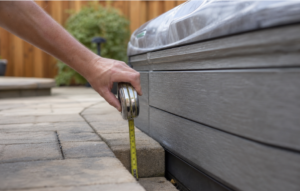
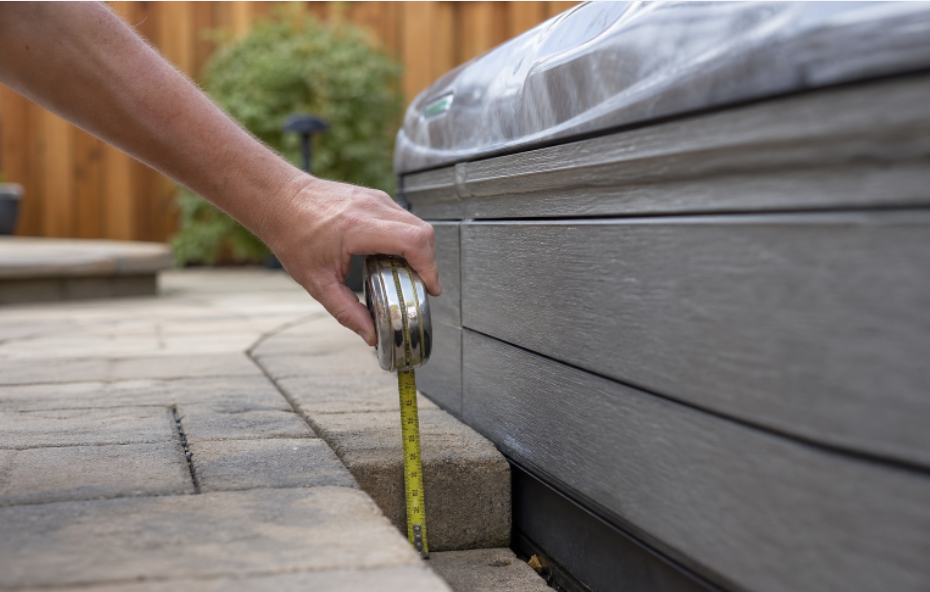
Measure more than the tub’s footprint. Mark the proposed size on the ground with tape or chalk, then account for steps, a walking path, cover clearance, and access to the equipment panel. A cover lifter also needs space behind or beside the spa when opened.
Check the entire delivery route as carefully as the final location. Measure gates, narrow side yards, doors, turns, stairs, slopes, low branches, and overhead obstructions. A tub that fits beautifully on a patio still needs a safe route from the delivery truck to that patio.
Compare Seating Layouts, Depth, and Comfort
Lounge seats support the legs and back but take up space that could otherwise serve several upright users. Captain’s chairs can provide more defined support, while open benches make it easier to change positions or accommodate different body sizes. Seat depth matters as much as style. Shorter users should not have to float, and taller users should be able to sit comfortably without feeling cramped.
Pay attention to where jets land on your body, not simply how many jets a model has. A seat that supports your shoulders, hips, and lower back naturally is usually more valuable than an impressive specification sheet.
Pick a Safe and Practical Placement Area
A spot near the back door is convenient during cold, wet, or snowy conditions. A patio often provides level access, while a private corner can improve wind protection and reduce visibility from neighboring properties. A deck may be an option, but its structure should be reviewed for the weight of the filled spa and its occupants. Indoor or enclosed locations also need thoughtful ventilation, drainage, moisture control, and service access.
Choose a location with safe footing, useful lighting, manageable runoff, and enough privacy to make regular use appealing. A beautiful tub placed too far from the home may see less use on winter evenings.
Plan Installation Details Early
Prepare the Base and Delivery Plan
A filled hot tub needs a stable, level, load-bearing surface. Common approaches include a properly prepared concrete pad, an engineered deck, or an approved support system. Avoid placing a spa on uneven ground or a surface that can shift over time. Confirm difficult delivery conditions before ordering, since narrow access or soft ground may require special planning.
Confirm Electrical Requirements
Some spas use a plug-in connection, while others require dedicated hardwired electrical service. The electrical setup can affect installation cost, heating performance, and available jet operation. Review local requirements before purchase, and use a licensed electrician whenever wiring, protective devices, or a new circuit is required.
Review Energy Use and Ongoing Costs
Budget beyond the purchase price for site preparation, delivery, electrical work, water-treatment products, filters, cover replacement, and occasional repairs. Electricity use depends on factors such as insulation, cover condition, water temperature, outdoor exposure, and how long the cover remains off. A well-fitted cover and a sensibly sized tub can help keep routine ownership simpler.
Build a Simple Water-Care Routine
Water care is easier when it becomes a regular habit. Test the water on a consistent schedule, adjust sanitizer and pH according to the product directions, rinse or clean filters as directed, and keep the cover clean and secured between uses. Showering before a soak can also reduce the oils, cosmetics, and debris introduced into the water.
The CDC recommends that residential owners regularly test chlorine concentration and pH to help reduce swimming-related illness risks. Drain and refill the spa according to the manufacturer’s instructions and your water-care routine.
Follow Hot Tub Safety Basics
Keep water at or below 104°F, secure the cover when the tub is not in use, maintain a well-lit and slip-resistant surrounding surface, and avoid alcohol before or during soaking. Children need close supervision, and the CDC advises that children younger than five should not use hot tubs. People who are pregnant or have health concerns should ask a healthcare provider about safe use.
Following healthy hot tub use practicesalso means staying out of the water when sick with diarrhea and avoiding swallowing the water.
Avoid Common Buying Mistakes
- Choosing based on the advertised seat count alone.
- Skipping measurements of the delivery route.
- Forgetting clearance for the cover, steps, and service panel.
- Assuming an existing deck can support a filled tub.
- Waiting until after purchase to address electrical needs.
- Focusing on jet quantity instead of comfort and jet placement.
- Overlooking local building, electrical, zoning, or homeowner association requirements.
Use a Final Planning Checklist
- Identify the regular users and primary purpose.
- Measure the installation area and delivery path.
- Allow room for the cover, steps, walking space, and service access.
- Confirm the base, electrical plan, and any needed professional review.
- Include water-care supplies and ongoing costs in the budget.
- Test seating comfort before selecting a final layout.
- Review safety practices and applicable local requirements.
Make the Final Choice With Confidence
The right hot tub for a Salt Lake City home is one that fits the available space, supports safe installation, and feels comfortable enough to use often. Careful planning before purchase can prevent expensive surprises and help create a relaxing outdoor retreat that works for your household in every season.