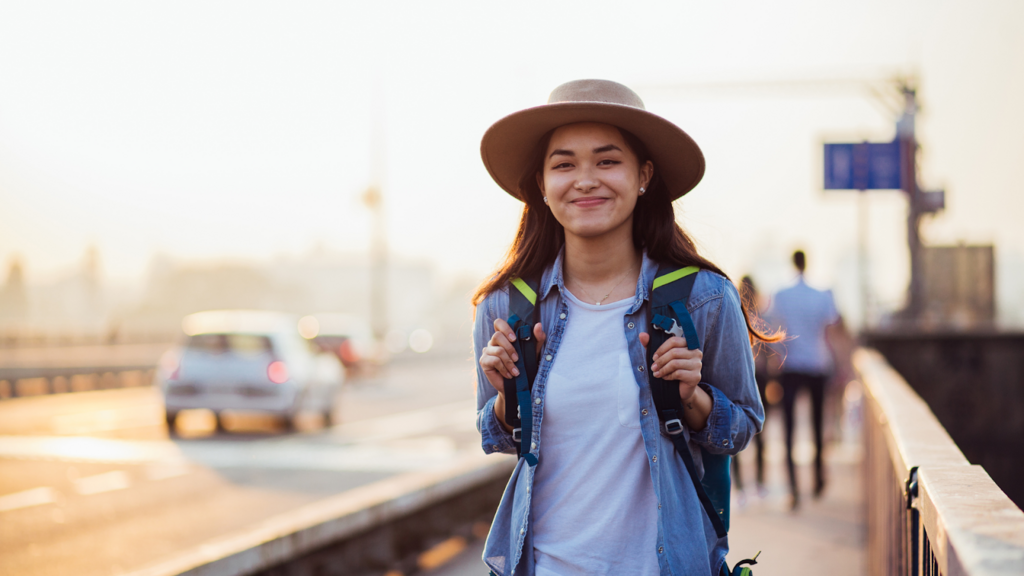
Traveling alone offers lessons that group trips rarely touch. Without familiar voices guiding decisions, you learn to trust your instincts, adapt quickly, and sit comfortably with your own thoughts. This shift toward independence isn’t niche; it reflects a broader movement.
The solo travel market is the fastest-growing segment of global leisure travel, projected to grow at a 9.1% compound annual rate between 2023 and 2030. Beyond trends or social media, solo travel represents a deeper pursuit of self-discovery that reshapes confidence, perspective, and how you engage with the world.
The Psychology Behind Solo Travel Personal Growth
Something remarkable happens in your head when you’re figuring out foreign metro systems without backup. Gen Z and Millennials increasingly frame solo trips as self-care and personal development tools. Why? Because solo travel personal growth operates at the neurological level, not just the feel-good emotional one.
Why Your Brain Rewires When You Travel Alone
Your brain is basically addicted to novelty. Fresh environments activate neuroplasticity, sparking serious cognitive development. Every solo decision, whether it’s deciphering a breakfast menu or navigating back to your hostel, reinforces neural pathways that create authentic confidence. No safety net exists. Your prefrontal cortex goes into overdrive because it has to.
The Difference Between Alone and Lonely on the Road
Most people confuse these two concepts, but they’re wildly different. Choosing solitude while traveling actually boosts mental health because you finally get space to process thoughts, minus constant external chatter. You’re essentially building a functional relationship with yourself, discovering that you’re actually a decent company.
Understanding these brain mechanics matters because they translate into real situations where you become your own rescue team.
Radical Self-Reliance: Becoming Your Own Safety Net
Picture your flight getting scrapped at 11 PM in a city you’ve never seen. That’s when you uncover abilities you didn’t know you possessed. The benefits of traveling alone crystallize fast; you’re solving problems without asking for a vote.
Problem-Solving Under Pressure
Lost bags, missed trains, language barriers that reduce you to pointing at pictures like a confused toddler, these aren’t emergencies. They’re in boot camp. Each obstacle you conquer solo builds transferable confidence. That big presentation at the office? Child’s play compared to haggling for a hostel refund when you barely speak the language.
Staying Connected Without Losing Independence
South Africa exemplifies that sweet spot between adventure and practicality. The country offers everything from Cape Town’s stunning cliffs to Kruger’s wildlife, drawing solo travelers who want challenges mixed with accessibility. Here’s the thing: modern tech means you don’t have to sacrifice safety for freedom anymore.
Staying connected while exploring destinations like South Africa has gotten absurdly easy with options like esim south africa that work instantly without the hassle of tracking down local SIM cards. You can ping your location to worried parents while keeping the flexibility to ditch plans on a whim, which is exactly what solo exploration requires.
Practical independence is just the foundation. The deeper magic happens when you meet yourself without the usual masks.
Unfiltered Self-Discovery: Meeting Your Authentic Self
Remove your friend group, your daily schedule, your neighborhood coffee spot, what remains? The answer feels both scary and freeing. Traveling alone self discovery accelerates when nobody’s watching.
Stripping Away Social Masks and Expectations
Back home, you’re juggling roles: employee, friend, partner, someone’s kid. Alone on the road? You’re just you. Want to lose three hours in a quirky museum everyone else would hate? Go for it. Feel like ditching that supposedly unmissable tourist trap? Skip it guilt-free. This freedom exposes genuine preferences you’d buried.
Confronting Your Shadow Self
Solo travel drags insecurities into daylight because hiding spots don’t exist. Scared of dining alone at restaurants? You’ll crush that fear within 72 hours. Carrying limiting beliefs about what you can handle? They evaporate when you successfully navigate countries where you can’t read street signs. It’s therapy pretending to be a vacation.
After you’ve excavated your own layers, you’re suddenly equipped to understand others on a deeper level, transforming from a generic tourist into a global citizen.
Cultural Intelligence: Reading the World’s Unspoken Language
Tour groups create cultural bubble wrap. Solo travelers don’t get that protection, which turns out to be a blessing.
Deep Immersion vs. Tourist Observation
Traveling solo, you’re approachable. Locals actually talk to you, sometimes inviting you home for dinner or sharing stories they’d never tell a group of twenty. You learn through errors without a buffer, ordering the mystery meat becomes a cultural education instead of embarrassment. This student mentality fundamentally alters how you navigate the world.
Developing Global Empathy and Perspective
Witnessing poverty firsthand hits differently when you’re sitting with it alone. You can’t distract yourself with group banter or intellectualize it away. These encounters demolish stereotypes and build understanding in ways no documentary can match. What solo travel teaches you about gratitude and privilege doesn’t exist in textbooks.
Cultural connections enrich your external journey, but solo travel’s biggest gift might be relearning intentional solitude.
Intentional Solitude: The Lost Art of Being Present
We’ve demonized boredom, but it’s actually creativity’s breeding ground. Solo travel permits you to be unstimulated, unscheduled, and fully present.
Breaking Digital Addiction Through Travel
Without social obligations pinging constantly, your phone naturally stays in your pocket longer. Watching a sunset delivers better dopamine than scrolling feeds. Mindfulness stops being something you schedule; it just happens when you’re sitting alone in a square, observing life without feeling pressure to document it.
Enhancing Observation and Sensory Awareness
Solo travelers catch detailed groups bulldozing past, how dawn light hits ancient stone, the cadence of a city waking up, the aroma of fresh bread escaping a bakery at sunrise. You develop an artist’s eye simply by having mental bandwidth to truly see. These memories stick because you created them through genuine presence.
Spending intentional time alone paradoxically reveals what you actually need from relationships. Here’s the relationship intelligence solo travel delivers.
Relationship Wisdom: Learning What You Need From Others
Complete freedom shows you what you genuinely miss versus what you assumed you needed. This distinction changes everything.
Understanding Your Social Battery and Boundaries
Some travelers discover they’re more introverted than they suspected. Others realize they crave human contact more than they admitted. Either way, experiencing total autonomy teaches you to establish healthy boundaries afterward. You’ll know precisely when you need space versus when you need people.
Choosing Travel Companions (and Life Partners) Wisely
After solo travel, you’ll identify compatible values instantly. Red flags that seemed minor, conflicting travel styles, opposing priorities, disregard for your boundaries, become obvious dealbreakers. You appreciate quality companionship because you’ve proven you can thrive independently.
Understanding social needs matters, but solo travel also forges something tougher: resilience to handle chaos.
Career and Life Purpose Clarity
Physical distance from routine noise provides a perspective impossible to achieve at home. Life-altering decisions frequently happen during solo journeys.
Discovering What Truly Matters Away From Daily Noise
That career you thought defined you? Solo travel creates space to question it honestly. The clarity emerging from distance reveals whether you’re walking the right path or just going through motions. Countless travelers return home to make bold pivots they’d been postponing.
Building a Location-Independent Mindset
Solo travel proves “home” can be anywhere, fundamentally reshaping how you conceptualize work and lifestyle design. Maybe that corner office matters less if you can work from a Portuguese seaside café.
These concrete skills merge with internal transformations to generate changes extending far beyond passport stamps. Here’s how one journey reshapes everything.
The Ripple Effect: How Solo Travel Changes Your Entire Life
The lessons don’t stay compartmentalized. They infiltrate every dimension of your existence in transformative ways.
Increased Confidence in All Life Areas
Professional environments feel less intimidating after you’ve bargained in street markets using broken phrases and hand gestures. Romantic connections improve when you enter them from completeness rather than emptiness. Social anxiety diminishes because nothing matches solo travel vulnerability.
Perspective That Lasts Long After You Return
Daily inconveniences shrink to appropriate proportions. Traffic delays seem trivial after you’ve missed overnight buses in remote areas and survived. Gratitude for basics, clean water, physical safety, and freedom of movement becomes authentic instead of performative. Your expanded worldview influences choices for years.
Inspired but intimidated? Let’s convert these transformative possibilities into actionable reality with practical first steps.
Getting Started: Your First Solo Journey
Start modestly if anxiety’s creeping in. A weekend getaway three hours away absolutely counts. Select destinations with solid tourist infrastructure, widespread English, and established solo traveler networks.
Critical preparation includes purchasing travel insurance, emailing yourself document copies, and saving emergency contacts offline. Pack minimally, mobility equals freedom. Learn basic safety protocols for your destination without spiraling into worst-case-scenario paralysis.
Before booking that ticket, let’s tackle the questions potentially holding you back from this transformative experience.
Final Thoughts on Your Solo Journey
Solo travel personal growth transcends collecting passport stamps; it’s about collecting versions of yourself you never imagined existed. The benefits of traveling alone compound long after you’ve unpacked, influencing relationships, career trajectories, and daily confidence. What solo travel teaches you about resilience, intuition, and self-sufficiency can’t be downloaded from any course or learned from any companion.
That first solo adventure might feel daunting, but the person you evolve into makes every uncomfortable moment worthwhile. Your transformation doesn’t begin when your plane touches down; it ignites the second you purchase that ticket.
FAQs on Solo Travel
- Is traveling alone actually safe for beginners?
Absolutely, with sensible precautions. Millions travel solo safely every year. Pick beginner-friendly spots like Portugal or Japan, maintain situational awareness, honor your instincts, and establish regular check-ins. Research dramatically reduces risk.
- How long should my first solo trip be?
Aim for 3-5 days initially. Long enough to taste independence but short enough to prevent crushing homesickness. Weekend adventures build confidence before you commit to extended journeys.
- Can introverts enjoy solo travel as much as extroverts?
Definitely, often more. Introverts flourish with complete control over social interaction timing. You engage when energized and recharge in solitude guilt-free. Many introverts specifically prefer solo travel for this autonomy.
Armed with knowledge, preparation, and answers, only one question remains: when will you leap?