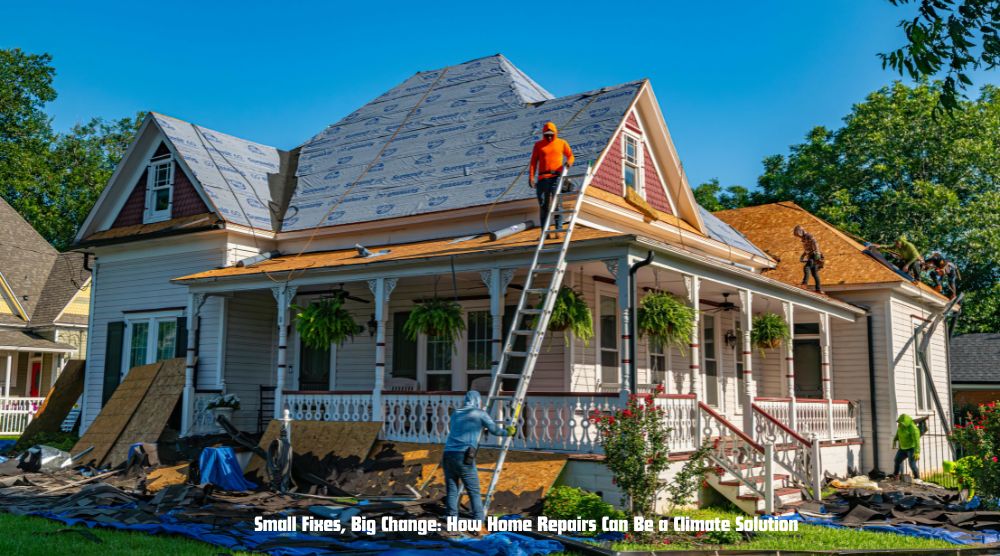
Climate change is often discussed in terms of massive systems: energy grids, global emissions, or large-scale industrial reform. While those conversations are important, they can sometimes make sustainability feel distant or overwhelming. The truth is that meaningful environmental change doesn’t always begin with sweeping innovations. Often, it starts much closer to home, in the everyday decisions we make about how we care for the spaces we live in.
Our homes are one of the most overlooked contributors to energy use and environmental strain. From inefficient insulation to leaky pipes and outdated fixtures, small problems quietly add up. When ignored, they lead to wasted resources, higher costs, and unnecessary environmental harm. But when addressed thoughtfully, these same issues become opportunities; small fixes that create long-term, positive change.
Rethinking Sustainability at the Household Level
Sustainability is sometimes framed as a future goal rather than a present responsibility. Yet many of the most effective environmental actions are available to us right now. Repairing instead of replacing, maintaining instead of discarding, and improving instead of expanding are all powerful ways to reduce waste.
Homes function as living systems. When one part is inefficient, the whole structure suffers. Drafty windows force heating systems to work harder. Old plumbing fixtures waste water daily. Poor ventilation affects air quality and comfort. These are not dramatic problems, but they are persistent ones—and their environmental impact compounds over time. By shifting attention to household maintenance, sustainability becomes less abstract. It becomes practical, measurable, and personal. This approach also makes climate action more accessible, especially for people who may not have the resources to invest in major upgrades or new technologies.
The Power of Small Repairs
Small repairs are often dismissed as cosmetic or optional. In reality, they are some of the most effective tools we have for reducing energy and resource use. Fixing a leaking faucet can save thousands of liters of water over a year. Sealing gaps around doors and windows can significantly lower heating and cooling demands. Updating worn-out seals, hinges, and fittings can extend the life of existing materials rather than sending them to landfills.
These changes don’t require advanced technical skills or major financial investments. What they require is awareness—a recognition that neglect has environmental consequences, and care has environmental benefits. When multiplied across neighborhoods and communities, these minor actions become a collective force. This mindset is especially important in regions where resources are limited. Repair culture encourages resilience, creativity, and responsibility. It values what already exists and asks how it can be improved rather than replaced.
Maintenance as an Act of Environmental Responsibility
Maintenance is often seen as reactive—something done when a problem becomes unavoidable. A more sustainable approach treats maintenance as proactive care. Regular inspections, timely repairs, and thoughtful upgrades prevent larger failures that require more materials, energy, and cost to fix. In this way, home maintenance becomes an act of environmental responsibility. It aligns with the idea that sustainability is not only about innovation but also about stewardship. Taking care of what we already have reduces demand for new resources and minimizes waste.
This approach also opens the door to eco-friendly home remodeling choices that prioritize efficiency and longevity over appearance alone. Simple improvements—like improving insulation, choosing durable materials, or upgrading ventilation—can transform a home’s environmental footprint without changing its character or scale.
Everyday Homes as Climate Solutions
It’s easy to think of climate solutions as something designed by experts or implemented by governments. But homes are one of the most widespread forms of infrastructure on the planet. Each one represents an opportunity to reduce emissions, conserve water, and improve energy efficiency. When homeowners and renters alike adopt a mindset of care, they contribute to broader environmental goals without needing permission or policy changes. These actions are quiet but consistent. They don’t rely on trends or technology cycles. They rely on intention.
Many people begin this journey simply by learning what areas of their homes are most wasteful. Energy bills, water usage, and comfort levels often provide clear clues. Addressing these issues step by step builds momentum and confidence, making sustainability feel achievable rather than intimidating.
Repair Culture and Long-Term Thinking
Repair culture is about more than fixing what’s broken. It’s about valuing longevity, understanding systems, and resisting the idea that newer is always better. This way of thinking has deep roots in communities that have learned to innovate under constraint. When applied to housing, repair culture reduces dependence on constant consumption. It encourages learning, skill-sharing, and local problem-solving. These values are essential for building a sustainable future, especially as climate pressures increase. Instead of asking, “What can I replace?” repair culture asks, “What can I improve?” That shift in perspective changes how we interact with our environment and with each other. It fosters patience, care, and accountability.
Community Impact Through Individual Action
One repaired home may seem insignificant in the face of global climate challenges. But communities are built one home at a time. When many individuals commit to reducing waste and improving efficiency, the cumulative impact is substantial. This collective effect also normalizes sustainability. It shifts environmental responsibility from something exceptional to something expected. Over time, this cultural shift influences building standards, design priorities, and public awareness. Small fixes also tend to be shared. Neighbors talk. Skills spread. What begins as a personal decision often becomes a community practice.
A Future Built on Care, Not Excess
Sustainability does not require everyone to build something new. In many cases, it asks us to look more closely at what we already have. Homes that are maintained with care last longer, perform better, and demand less from the environment. As climate challenges grow more urgent, solutions that are accessible and scalable become increasingly valuable. Small home repairs meet both criteria. They are within reach for many people, and their benefits multiply across time and space. By embracing maintenance, repair, and thoughtful improvement, we turn our living spaces into quiet climate solutions. Not through grand gestures, but through consistent care. Not through excess, but through intention. And in doing so, we prove that meaningful change often begins with the smallest of fixes.