In today’s dynamic business world, demand for innovative, high-performing commercial spaces has never been greater. Modern companies face rapid growth, shifting operational models, and relentless competition factors that demand flexible, future-proof workspaces. Corporate leaders are increasingly recognizing that the spaces where their teams operate must keep pace with evolving business goals, workspace standards, and employee expectations. This is where the expertise of a commercial contractor Georgia comes into play. These contractors don’t just build structures; they help shape companies’ identities, transforming ambitious visions into reality while staying ahead of industry trends. With commercial contractors as partners, businesses are empowered to adapt to change, maintain operational resilience, and reinforce their brand in a competitive marketplace.
Modern businesses increasingly rely on commercial contractors to create flexible, productive environments. These contractors use modern tools and sustainable materials to meet shifting workplace trends for collaborative, eco-friendly spaces. They face challenges such as labor shortages and supply chain disruptions, necessitating innovative strategies and a commitment to sustainability. As partners in business growth, contractors evaluate software solutions, develop sustainable procurement processes, and integrate advanced construction methods, playing a crucial role in the success of commercial projects.
Embracing Technological Advancements
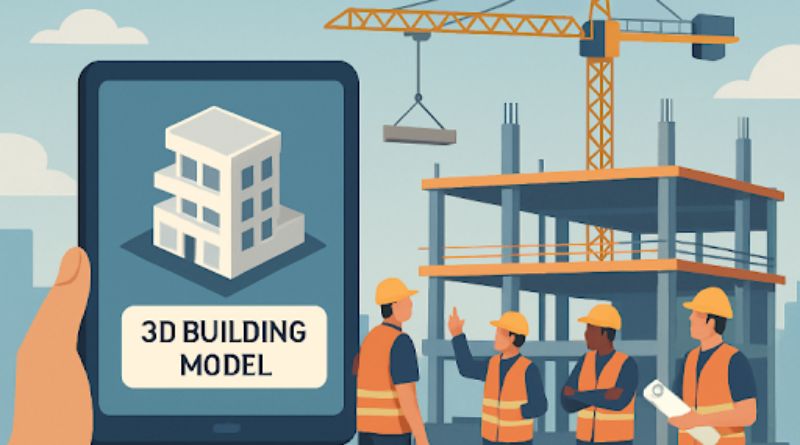
The construction industry has undergone a significant transformation driven by rapid technological progress, with solutions such as Building Information Modeling (BIM) at the forefront. BIM provides a digital representation of the entire building process, enabling contractors to create intricate 3D models for each aspect of a project. This collaborative tool streamlines communication among architects, engineers, and builders, helping teams identify potential issues early and avoid costly errors and rework. The precision and detail BIM offers keep projects on schedule and within budget, giving businesses more predictable outcomes. Drone technology further enhances efficiency, providing contractors with a real-time aerial view of sites for progress monitoring, safety inspections, and site measurements.
Innovative Building Materials
As sustainability becomes a driving force in business and construction, forward-thinking commercial contractors have shifted their focus to durable, environmentally responsible materials. Self-healing concrete, for example, uses specialized bacteria to automatically seal small cracks, extending the structure’s lifespan and significantly reducing long-term maintenance and repair costs. This technology is especially valuable in commercial construction, where downtime caused by repairs can be costly for businesses. Another breakthrough, cross-laminated timber (CLT), is engineered from layers of solid wood pressed together to create robust structural elements. CLT buildings are not only sturdy and fire-resistant but also have a markedly lower carbon footprint than conventional steel or concrete. By actively sourcing and using innovative materials, contractors help companies meet regulatory benchmarks and green building certifications, while positioning them as leaders in environmental stewardship and corporate responsibility.
Addressing Labor Shortages
The construction sector continues to face significant labor shortages, putting pressure on contractors to deliver projects on time and within budget. These shortages are largely due to an aging workforce and a lack of younger, skilled tradespeople entering the industry. Many commercial contractors are rising to the challenge by investing in workforce training programs, developing apprenticeship opportunities, and leveraging trade school partnerships to attract new talent. To further appeal to prospective employees, contractors are increasingly offering competitive wages and expanded benefits, including healthcare, wellness programs, and educational stipends. 73% of contractors intend to raise technician salaries this year to compete for high-quality workers. Given that skilled labor is the heartbeat of the construction industry, ongoing investment in training, safety, and employee development is critical to ensuring quality workmanship, project reliability, and the sector’s ongoing health.
Supply Chain Management
Material supply chain disruptions remain a top concern for commercial contractors, especially amid ongoing global instability that is affecting timelines and budgets. Delays in receiving materials can cause cascading setbacks and increased costs. To mitigate these obstacles, contractors are adopting advanced supply chain management practices, such as building stronger relationships with suppliers, maintaining strategic inventory levels, and using digital platforms to forecast demand and track shipments in real time. Modern contractors are also consolidating material orders with a select group of reliable vendors and local supply houses, reducing the risk of delays and ensuring faster access to essential items. Nearly half of contractors now procure directly from supply houses. These measures help streamline project delivery and maintain project profitability, even amid volatile market conditions.
Adoption of Software Solutions
Digital transformation has taken root in commercial contracting, with software solutions now central to efficient project delivery. Field Service Management (FSM) platforms, for example, allow contractors to automate scheduling, maintenance, compliance tracking, and customer communications all from a single dashboard. These platforms improve workflow transparency, enhance collaboration, and streamline every stage of a construction project, from bid to closeout. Most midsize trade businesses today integrate several software tools to manage estimating, procurement, safety documentation, and client interactions. Notably, larger firms with annual revenues of $30-40 million boast a 93% adoption rate of multifaceted software solutions, cementing their status as leaders in digital efficiency and quality assurance. Implementing advanced software not only accelerates delivery timelines but also helps contractors track key operational metrics for continuous improvement and competitive advantage.
Prefabrication and Modular Construction
With tight schedules and budgetary constraints, the construction industry is seeing a surge in prefabrication and modular building methods. These approaches enable contractors to assemble significant portions of a building, such as walls, floors, and bathrooms, off-site in a factory-controlled environment where quality and speed are maximized. Once complete, the modules are transported to the construction site for quick installation, dramatically shortening project timelines. Prefabrication minimizes the disruptions associated with traditional construction, such as noise and on-site traffic, which is especially crucial for businesses operating in congested urban locations. The controlled environment also reduces material waste and bolsters quality. For companies seeking scalable, flexible spaces that can be reconfigured as operations grow or change, modular construction stands out as a practical, cost-effective option that balances speed, quality, and sustainability.
Conclusion
Commercial contractors have become essential partners for any business aiming to create adaptable, high-performance, and future-ready workspaces. Through a blend of advanced technology adoption, the innovative use of sustainable materials, and proactive responses to labor and supply chain challenges, contractors deliver the solutions modern businesses need to thrive. By working with expert contractors, organizations can focus on their core objectives with confidence that their infrastructure will support ongoing growth, facilitate innovation, and ensure long-term operational success.