You can learn a lot from a real estate listing. Square footage, number of bedrooms, whether the kitchen got redone in 2021, and what the primary bathroom looks like in a flattering light. What you can’t learn is how the street feels at nine on a Tuesday. Whether neighbors leave packages on the porch all afternoon. Whether the park a block away is full of kids after school or sitting empty by dinner. Safe neighborhoods don’t always announce themselves in the photos. And the ones that photograph well aren’t always the ones you’ll enjoy once you’ve moved in.
That gap is the part of home-buying that catches people off guard. It’s easy to make a decision based on the house itself, because that’s what’s on the screen in front of you. The neighborhood, though, is what you’ll actually be living in three years from now, long after the excitement of the new kitchen has faded. Picking a house is a weekend decision. Picking where that house sits is the one that compounds.
Most cities of any real size contain several versions of themselves. Family-focused streets with strong school ratings sit a short drive from districts with very different rhythms, and the gap between them is rarely obvious until you’re inside it. A block-by-block breakdown of safe neighborhoods in Salt Lake City makes the point plainly: one metro, very different streets, and the same zip codes. Picking the metro is one decision. Picking the block inside it is another.
Here’s how to close that gap before you sign anything.
Read the Listing, Then Read What Isn’t There
A listing is a marketing document. It’s designed to get you interested in a specific address, not to give you an honest assessment of what surrounds it. That’s fine, as long as you know what it’s doing.
Things listings rarely tell you directly: traffic patterns, parking realities, what the sidewalks look like after dark, how old the neighboring houses are, whether there’s construction scheduled nearby for the next year, or whether the block is mostly owner-occupied or mostly rentals. None of that is hidden. You just have to go looking.
The National Association of Realtors has a practical checklist for buyers that covers narrowing down a search to three or four neighborhoods and weighing factors beyond the house itself: schools, healthcare proximity, shopping, and area expansion plans. It’s a good one to print and take with you, and it nudges you to think in neighborhood terms rather than house terms.
Walk the Block Twice at Different Time
This is the single most useful thing you can do, and a lot of people skip it.
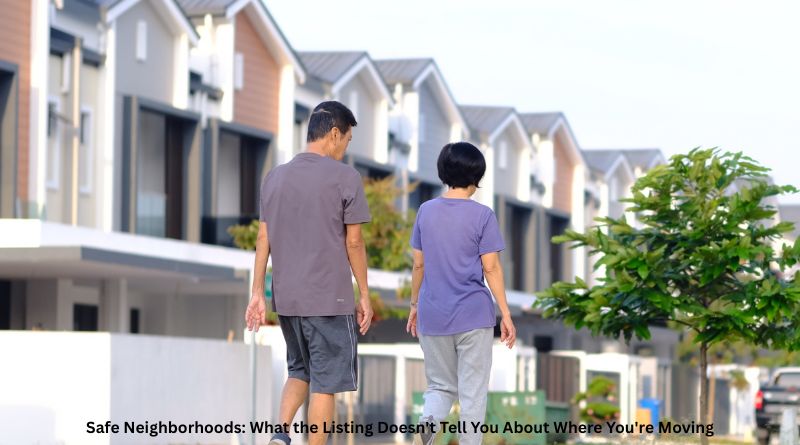
Daytime tells you one story. Evening tells you another. Weekend tells you a third. A block that feels calm and tree-lined on a Sunday afternoon can turn out to have cut-through traffic during weekday rush hour. A street that feels quiet on a Thursday night can be packed with bar traffic on Saturday. You want to see the full picture before you buy, not after.
What to notice on those walks: the state of the sidewalks and streetlights; whether people are walking dogs and pushing strollers; how many cars park on the street overnight; and whether porches have furniture on them or sit bare. None of this tells you anything definitive on its own. All of it together tells you something. It also gives you the practical read you’ll want on moving day. Where the truck can park, how narrow the access is, whether the stairs from the curb are going to be a problem. The walk-through isn’t just about the decision. It’s the first page of the move itself.
What Crime Data Actually Shows You
Crime stats are useful, but they’re not a simple good/bad readout. They’re a starting point.
Most city police departments now publish some version of a public crime dashboard. Salt Lake City’s police department, for example, offers public crime statistics broken out by area and includes a note worth repeating: statistics only tell part of the story in any neighborhood. They cover reported incidents, which isn’t the same as total incidents. They include categories that affect different people differently. A block with a high number of reported car break-ins might still be fine to live in for a family but worth knowing about if you park on the street.
Read the data. Then pair it with a walk-through. That’s the honest read.
Schools, Parks, and the Stuff That Compounds
If you have kids or plan to, schools shape the decision more than most listings suggest. If you don’t, school quality still tends to track with property values, so it’s worth factoring in as a hedge on your own equity.
Parks matter for a reason that’s less obvious. They’re where neighbors become familiar to each other. A well-used park is a sign of a block that knows itself. An empty one, depending on the time of day, can mean a lot of things. None of them are automatically bad, but they are worth noticing.
Same with local businesses. A neighborhood coffee shop that’s been open more than five years is a quiet indicator of stability. A block with lots of “For Lease” signs is telling you something worth hearing.
The Conversations Nobody Signs You Up For
If you want the real take on a neighborhood, the best source is the people already living in it.
This sounds intrusive. It isn’t. Stand in line at the coffee shop on a Saturday. Chat with the person walking a dog past the house you’re considering. Ask the barista how long they’ve worked there and whether they live nearby. People who live somewhere will tell you what a listing can’t.
The agent showing you the house has useful knowledge, but their incentives aren’t perfectly aligned with yours. That’s not a criticism. It’s the structure of the transaction. A second opinion from someone without a stake in the sale is always worth getting.
The Tradeoffs Nobody Wants to Say Out Loud
Safer neighborhoods tend to cost more. That’s not a moral statement; it’s a real estate one. The same forces that make a block feel settled and low-crime also drive up the price to get in. Owner-occupancy, maintained properties, and neighbors with skin in the game. Those are the same things buyers pay a premium for.
So the honest question isn’t “what’s the safest neighborhood in this city?” It’s “what’s the safest neighborhood I can actually afford, given what else I need out of this move?” Commuting distance, school district, proximity to family, and access to the kinds of shops and services you use weekly. All of those go into the equation, and safety is one variable in it, not the whole thing.
If your budget limits you to a neighborhood that’s solid but imperfect, a lot of small decisions still matter. The specific block within it. The cross street. How far is it from the nearest main road. How close to a park. These gradients move the needle more than people expect. They also shape the move itself. A house on a quiet side street with a real driveway is a different moving day than the same house tucked behind a one-way and a loading-zone sign.
When to Stop Researching and Go Live There
At some point you have to make a call. No amount of research will give you a perfect answer, and perfect isn’t the standard anyway.
A reasonable approach: narrow the list to three or four neighborhoods. Walk each one at different times. Check the crime data. Talk to a few people who live there. Look at the schools, the businesses, the parks. Then trust your own read, adjusted for your actual budget and actual life. And before the keys change hands, think through the move itself. Access, parking, stairwells, and the distance from the truck to the front door. The neighborhood you pick decides how much of moving day you actually control and how much of it controls you. That’s the difference between arriving and recovering.
The right neighborhood isn’t the one that photographs best. It’s the one that still feels right six months after the boxes are unpacked, when the novelty has worn off, the commute has settled into a pattern, and the street you walk every evening starts to feel like a place you recognize.