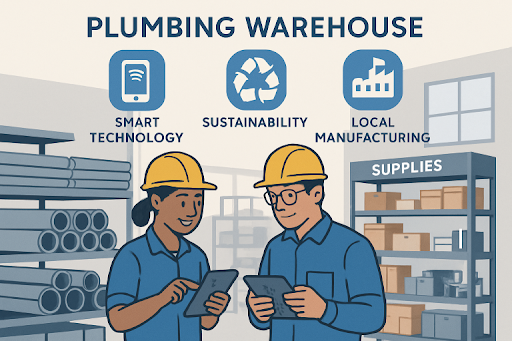
Innovation is redefining every facet of the plumbing industry, but the most transformative changes are happening behind the scenes in the supply chain. From manufacturing and logistics to inventory and customer service, today’s plumbing suppliers are adopting new technologies and more innovative strategies to respond to changing demands. Forward-thinking businesses, such as Cruco Mill & Industrial Supply, are at the forefront of this exciting shift, showcasing how integrated solutions and sustainable practices are reshaping the industry for the future.
As pressures grow from both economic uncertainty and evolving customer expectations, it’s crucial to remain agile and innovative. Adopting digital tools, reinforcing supply chains closer to home, and prioritizing sustainability aren’t just trends—these are the pillars driving long-term resilience and operational excellence across plumbing suppliers and distributors. The impact on both efficiency and environmental responsibility is profound and promises to set a new standard in the years ahead.
Supply chain innovation benefits not just major manufacturers and distributors, but also the contractors, builders, and homeowners they serve. With improved transparency and increasingly automated processes, buyers experience fewer delays, more consistent product availability, and actionable insights that save time and reduce risk. The plumbing sector, often viewed as traditional, is proving itself capable of remarkable modernization and strategic reinvention.
Backed by robust analytics and a deepening focus on eco-friendly practices, these changes are not only about cutting costs—they are also about building smarter, leaner, and more responsible supply chains. Embracing this evolution ensures that industry stakeholders can meet ever-rising standards for speed, quality, and environmental stewardship.
Integration of Smart Technologies
Smart technologies have redefined how plumbing supply chains operate from end to end. The use of Internet of Things (IoT) devices, such as embedded sensors in plumbing fittings, enables continuous monitoring of product health and system performance. These sensors collect detailed data—including temperature, pressure, and flow rates—empowering distributors and facility managers to detect leaks or blockages before they become costly issues. Predictive alerts mean rapid interventions, reducing water waste and property damage.
Beyond product tracking, smart systems integrate with cloud-based analytics platforms for deeper business intelligence. This allows for the efficient allocation of parts, more accurate inventory forecasting, and proactive maintenance scheduling. According to Forbes, the integration of IoT in supply chains is rapidly boosting operational agility and cost-effectiveness, which is especially valuable in today’s unpredictable market.
Onshoring and Reshoring Efforts
In recent years, global disruptions and logistical bottlenecks have compelled many plumbing manufacturers and suppliers to bring production facilities closer to their end markets. Known as onshoring or reshoring, these efforts are designed to enhance supply chain reliability by reducing dependence on overseas suppliers and minimizing transportation time and costs. This shift has been particularly crucial given the increasing uncertainty in innovative international shipping and trade policies.
The benefits extend far beyond risk mitigation. Onshoring also aligns with sustainability initiatives by reducing emissions associated with long-haul transport. Furthermore, supporting local manufacturing strengthens regional economies and fosters innovation through closer collaboration between producers and distributors. A recent analysis by The Wall Street Journal illustrates how these innovations are rapidly becoming the industry standard for forward-looking companies.
Sustainability Initiatives
Sustainability is more than a buzzword—it’s become an imperative for the plumbing supply chain. Leading companies now incorporate renewable energy into their manufacturing processes and prioritize materials that are recyclable or biodegradable. Water-efficient fixtures, pipes manufactured from post-consumer resins, and low-emission production environments are hallmarks of this new approach.
Central to this transformation is the adoption of the innovative economy model. Products are increasingly designed for longevity, modular repair, and end-of-life recycling. This reduces waste, prevents landfill accumulation, and conserves resources throughout the entire supply chain. The approach not only fulfills corporate and regulatory mandates for environmental responsibility but also addresses the preferences of consumers who are actively seeking out green-certified products.
Digital Tools in Inventory Management
One of the most profound impacts of innovation in the plumbing supply chain is evident in how inventory is managed. Digital platforms have introduced unprecedented visibility into stock levels, demand patterns, and reorder points. Advanced software enables real-time tracking and predictive analytics, leading to smarter procurement and vastly reduced stockouts or surpluses.
Many large distributors now utilize automated systems, including smart lockers and RFID tagging, for secure, convenient, and rapid product pickup or delivery. This not only accelerates order fulfillment but drastically improves customer satisfaction and operational efficiency. Seamless integration of these digital tools enables plumbing professionals to spend less time sourcing materials and more time focusing on projects.
Conclusion
The plumbing supply chain is experiencing a digital and strategic renaissance. From IoT integration and local manufacturing to environmentally friendly innovations and robust digital inventory solutions, the industry is evolving rapidly. Leading organizations that champion these advancements are well-positioned to achieve greater efficiency, resilience, and sustainability.
Those invested in the future of plumbing—whether as manufacturers, distributors, or end users—stand to benefit immensely by adapting to emerging technologies and progressive supply chain models. As these innovations gain momentum, the plumbing industry’s capacity for sustainable growth and customer value is set to reach new heights.